Skip to content
White TrueSport logo.
  • About
    • Ambassadors
    • Award Program
    • Media
    • Partnerships
    • True Experts
    • TrueSport Team
  • Learn and Teach
    • For Coaches
    • For Educators
    • For Parents
    • Train the Trainer
    • Mindset of a TrueSport Champion
    • Publications
    • Videos
    • TrueSport Topics
      • Sportsmanship
        • A Good Sport
        • Bullying Prevention
        • Conflict Resolution
        • Leadership
        • Respect & Accountability
        • Teamwork
      • Character Building & Life Skills
        • Decision Making
        • Goal-Setting
        • Mental Wellness
        • Performance Anxiety
        • Perseverance
        • Shortcuts
      • Clean & Healthy Performance
        • Body Image
        • Clean Sport
        • Dietary Supplements
        • Energy Drinks
        • Hydration
        • Nutrition
        • PEDs
        • Preparation & Recovery
  • Join Us
    • #ShowYourValues
    • Cohort for Change
    • TrueSport Talks
      • TrueSport Talks – RESOURCES
    • Newsletter Sign-Up
    • Events
  • Shop TrueSport
  • About
    • Ambassadors
    • Award Program
    • Media
    • Partnerships
    • True Experts
    • TrueSport Team
  • Learn and Teach
    • For Coaches
    • For Educators
    • For Parents
    • Train the Trainer
    • Mindset of a TrueSport Champion
    • Publications
    • Videos
    • TrueSport Topics
      • Sportsmanship
        • A Good Sport
        • Bullying Prevention
        • Conflict Resolution
        • Leadership
        • Respect & Accountability
        • Teamwork
      • Character Building & Life Skills
        • Decision Making
        • Goal-Setting
        • Mental Wellness
        • Performance Anxiety
        • Perseverance
        • Shortcuts
      • Clean & Healthy Performance
        • Body Image
        • Clean Sport
        • Dietary Supplements
        • Energy Drinks
        • Hydration
        • Nutrition
        • PEDs
        • Preparation & Recovery
  • Join Us
    • #ShowYourValues
    • Cohort for Change
    • TrueSport Talks
      • TrueSport Talks – RESOURCES
    • Newsletter Sign-Up
    • Events
  • Shop TrueSport
Facebook X.com Logo (formerly Twitter.) Youtube Instagram Linkedin Pinterest
Facebook Twitter Youtube Instagram Linkedin Pinterest

Consistency and Commitment: Olympian Chris Mazdzer on Goal Setting

  • December 1, 2025
  • Goal-Setting
Athletes

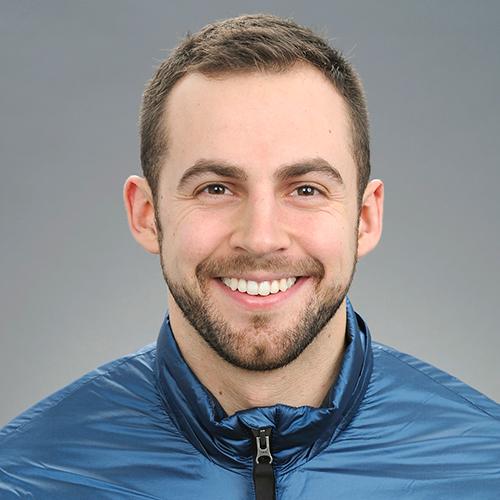
Chris MazdzerChris Mazdzer headshot. is no stranger to goal setting. The now-retired luge athlete competed in four winter Olympic Games, winning the silver medal in 2018 and becoming the first non-European racer to ever medal in the men’s single luge. Since he retired from the sport two years ago, he’s only become clearer on the best ways to set goals that are actually achievable at any level of sport.

Growing up near Lake Placid in upstate New York gave Mazdzer a firsthand view of the work that went into actually achieving an athletic goal. Home to many Olympians, Lake Placid is a primary training ground for elite winter sports because an Olympic Training Center is located there. “If you walk down Main Street in Lake Placid, you’re probably going to run into an Olympian, and I was very fortunate that I learned at a young age that Olympians aren’t superheroes. There’s nothing super about us: We’re ordinary people, just living and training. What I learned was that Olympians set themselves apart because they set goals, and more importantly, they do the little things every single day in order to bring those goals closer. They just work relentlessly to achieve them.”

He often speaks to young athletes about the example of the Terra Nova Expedition to the South Pole in 1911. There were two teams of explorers, led by Roald Amundsen and Robert Falcon Scott. Amundsen’s team took the approach of hiking 20 miles every day, regardless of weather. Scott’s team based their mileage on the weather conditions, with some days spent hiking much further than 20 miles, some days spent resting. Amundsen’s team won the race by five weeks. Scott’s team made it to the South Pole, but none survived the journey back.

Chris Mazdzer on luge track in PyeonChang.To Mazdzer, this piece of expedition history perfectly encapsulates the idea of doing a little bit, a lot of the time. “Doing something every day is more important than doing a lot, some of the time,” he says. “For example, if you want to get strong, you’re not going to go to the gym for five hours one day a week. It’s obviously better to work out one hour five times a week. And that’s the part of goal setting that is often missed…the commitment to consistency.”

“Anyone can set goals, anyone can write things down, but once you’ve set the goal, what are the ongoing things you need to do to accomplish the big goal?” he adds. “Being able to break a goal down to the daily actions is the key.”

Consistency with daily actions doesn’t always mean doing the same thing every single day, though. Mazdzer gives the example of a skier trying to get prepared for the upcoming season in the summer months. “Step one shouldn’t be ‘wait for snow,'” he says. “If that’s what your goal setting looks like, you’re missing out on a lot of chances to get closer to your goal. Instead of waiting for snow to practice, what else can you do on a daily basis? You can get stronger in the gym. You can dial in your gear and figure out the best setup for your skis for different conditions. If you don’t go into the granular details of goal setting, then those aren’t goals, they’re just dreams.”

Keeping an eye on the big goal—making the team, winning the race—is still key, though. “You do need to have that big goal, that shiny thing that you are always aiming towards, because that helps you stay in alignment,” Mazdzer says. “The monotony of those small daily actions can get really boring, so to stay motivated, you do need that big goal to work towards.”

Man stretching thigh muscle before running outside in the snow.There’s also a side benefit of defining the smaller goals and daily actions you can take to achieve your big goal, Mazdzer adds. Not every goal is going to be achieved: Sport is ultimately defined by failure, even the greatest athletes of all time didn’t win every race or make every team. But the reason they were able to keep pushing towards their next goal was because they saw enough small successes and daily wins along the way to feel motivated even when the big goal didn’t work out.

Mazdzer himself has a great example of this: In his Olympic career, his goal was always to finish in a medal position. But he only medaled in one of the four Olympic Games he competed in. Did his goal or his approach look different in the year he finished in the silver medal position? No. And that’s the point.

“Even if you give 100%—doing those daily actions and accomplishing all of the things you need to in order to theoretically hit that goal—you don’t always get 100% back,” he says. “There were many years when I was giving 100% but getting 10% back, and I’d wonder if I was doing something wrong. But a lot of the time, nothing is actually wrong. There are circumstances out of your control, whether it’s equipment or weather conditions or other teams. Success in sport often depends on things that you can’t control, and it’s easy to give up in those moments. But through consistency, through dedication, you can keep trying. You just have to understand that your results don’t always reflect the input.”

Being able to come back from missing your goal and get back to the daily commitments is what Mazdzer defines as a strong, resilient athlete.

___________________________

Takeaway

Get clear on your big goal, write it down, and then work backwards. Once you know what goal you are trying to accomplish, break it down into actionable, measurable pieces. Mazdzer suggests doing something every single day to achieve your goals, even after failure.
Related Content

Loading...
Male athlete with leg prosthetic sitting on bench writing on paper.

How to Create Your Goal Pyramid with Paralympian Trevon Jenifer

  • December 1, 2025
Athletes
With focus and some strategic goal setting, Trevon Jenifer has gone on to become a four-time Paralympian in the sport...
Read More
Coach assisting athlete on a rowing machine.

8 Tips on Goal Setting from Weightlifter Abby Raymond

  • December 1, 2025
Athletes
Team USA Weightlifter, Abby Raymond, shares her best goal-setting tips for anyone who's in a data-heavy sport.
Read More
Teen girl writing in a note book while wearing headphones.

How to Set Goals That You Can Actually Control

  • December 1, 2024
Athletes
The best way to break a big goal down into bite-sized, controllable chunks to give yourself the best chance for...
Read More
Father and son on laptop together.

Have You Asked Your Athlete What They Don’t Want?

  • December 1, 2024
Parents
How to talk to your athlete about their goals and dreams, and how to reframe negatives into positive action steps.
Read More
1 2 … 11 Next »

Join Us

Subscribe
Shop TrueSport
Host TrueSport

TrueSport logo without icon in white.

© 2025 TrueSport | Privacy Policy | Terms of Use | Sitemap

Goal-Setting Lesson Video Transcript

Hi. I’m Trevon, Trey, Jennifer. Team USA wheelchair basketball player, Paralympian, and TrueSport Athlete. Today, I want to talk to you about goal setting. And there are three things that I would like you to know. First, successful athletes set goals and a planned roadmap. Second, goals should be written down, assessed over time, and changed if necessary. And third, goals need to be challenging in order to be worthwhile. As a freshman at Edinboro University, I was a part of a team that made the national championship game. And at that time, I recognized I was the low man on the totem pole, but I felt in my heart that I knew my dreams were so much bigger than winning a national title. I wanted to make Team USA. I knew what achieving my lofty goal was not going to be easy and that I would need to work hard every day.

So, as a reminder, I created a pyramid of goals that I kept right above my bed. This pyramid reminded me of the accomplishments that I was working towards and visually represented my need to create a solid foundation underneath me before reaching the top. In the bottom roll of my pyramid of goals I listed goals such as obtaining my bachelor’s degree, becoming a scholar athlete award recipient, and becoming an All-American. The middle row listed winning a national title and playing for a professional team. And at the top row, the most challenging of them all, I listed becoming a gold medalist for Team USA.

By understanding that there are smaller stepping stones to achieving my ultimate goal of being on Team USA, I was able to stay motivated and to stay focused on completing the smaller stepping stones fully before moving onto the next one. Now I’ll be the first to admit that not every goal that I listed on my pyramid was accomplished, but seeing my goals every day when I went to bed, I was able to push through the days that I felt like doing nothing in hopes of achieving the bigger picture. Remember, create a clear goal roadmap, assess your goals often, and continue to challenge yourself. I hope that you never stopped dreaming big or reaching for the stars. And I look forward to seeing where your roadmap takes you.

Body Image Lesson Video Transcript

Hi, I’m Kara Winger, Olympic javelin thrower, and TrueSport Athlete. Today, I want to talk to you about body image, and I have three things I’d like you to know. First, healthy thoughts often lead to healthier bodies. Second, there are varying body types and no one’s body is exactly like another. And third, true beauty goes deeper than the skin. As a multi-time Olympian, I’ve experienced a lot of variation and progression in my training. My coaches and I adapt to my training frequently, all with the goal of supporting my long-term success and health in the sport of javelin. I’m talking to you about body image today because sometimes even with the best of intentions and a common goal in mind, the changes you make to your training habits can prove to be detrimental if made for the wrong reasons. In the lead up to the 2012 Olympic trials, I was told in order to improve my performance on the field, I should try to become a leaner, skinnier version of myself.

So, I changed my diet. I went along with what I was being told to do, even though I’d had great success at a slightly heavier weight and higher body fat percentage and became much leaner than ever before. It seemed like a successful change at first, but I didn’t have nearly the results I’d had before. And I believe becoming leaner than my body naturally wanted to be was what caused my ACL to tear. In the end, it cost me heavily going into the 2012 London games. The takeaway for me, and hopefully for you, is that it’s important to know what works for you and your body and to not compare yourself to others. You should do your research and experiment with your diet to find what makes you feel the best, rather than focusing on what you look like. Today, if I feel like having a chocolate chip cookie, I have one, just not every day.

I’ve learned what a properly balanced meal for my body looks like and I recognize food as the fuel that keeps me throwing. I hydrate and allow myself time to recover. And I listen to and communicate with my body so that I can be the best version of myself. In the end, you are in control of how you see, treat, and respond to your body. We only get one and it’s amazing to discover how many things our bodies can do. Be a true sport athlete. Love who you are in this moment and get excited for all the places your body will take you.

A Good Sport Lesson Video Transcript

Hi, I’m Izy Isaksen, Team USA, Modern Pentathlon, Olympian, US Army Sergeant, and True Sport Ambassador. Today, I want to talk to you about being a good sport. There are three things I’d like you to know. First, real winners act the same toward their opponent, whether they win or lose. Second, follow the rules and be a gracious winner and respectful loser. And third, sportsmanship reveals your true character.

I started competing in Modern Pentathlon eight years after my older sister and three-time Olympian, Margaux Isaksen, began competing. I soon realized that people often compared the two of us. I would overhear spectators and teammates asking, “Who’s the better athlete,” and “Who’s going to beat the other.” Instead of letting outside pressures create a negative experience for us, I chose to practice winning and losing with grace and respect. I know that it would have been easy to let our hyper competitive mindset affect our relationship, but instead we decided to support and cheer for each other, regardless of our own performance. My experience of competing against and being compared to my older sister, taught me to focus on how to perform at my best, rather than putting wasted energy into wishing for others to fail.

I believe that sportsmanship reveals true character. So, no matter what situation I encounter during competition, I know it’s important to always treat people with respect and be a good sport. Remember, be a fierce competitor, find grace in all your victories and losses. And I hope to see you out there.

What Kind of Coach Do You Want to Be? Video Transcript

Edwin Moses: You’re a coach. Maybe what you want is very simple, for everyone to just run in the right direction, score for their own team, to try and try again and again. Maybe you want your athletes to become all stars. You want them to earn trophies, medals, win titles. You want them to reach the highest height their sport allows. And wanting all of that, of course, that’s good. But as every great coach discovers, developing a great athlete means nurturing, nurturing the even greater person within. Truth is, you have even more influence than you know.

You have the ability to affect even deeper change, to take what’s in your hands and do something even more extraordinary. You can be both the coach who provides the skills needed to win the game and the coach who helps them learn and succeed beyond the sport, to become all stars wherever they land in the future, and to enjoy their lives more now, because the confidence and courage they find working with you will stay with them when they need it the most. There are games to be won, lives to change. Coaches have the power to do both.

I’m Edwin Moses, and the lessons I’ve learned through sport have challenged me, guided me, and shaped my life forever. What kind of coach do you want to be?

THE SIMPLE TRUTH: DECODING THE SUPPLEMENT INDUSTRY VIDEO TRANSCRIPT

At first glance, dietary supplements look the same. They seem safe and healthy, but just because the label says a product is a dietary supplement, that doesn’t mean it’s safe. Unfortunately, you can’t tell whether a product is safe or not just by looking at the label. Most vitamins, minerals, fish oil, and other supplements containing nutrients are probably just fine, but supplements are not evaluated or approved by FDA before they are sold. Although it is rare for vitamins or minerals to be contaminated with drugs, there has been at least one case of a vitamin containing an anabolic steroid.

At the other extreme are products that contain drugs, stimulants, anabolic steroids, or other hormones. Even though these are not technically dietary supplements, many of them are labeled as supplements. For example, body-building products sometimes contain anabolic steroids or Selective Androgen Receptor Modulators, known as SARMs, or other hormones. Some pre-workout or energy products contain illegal stimulants like DMAA, ephedra, or other amphetamine-like stimulants. Weight loss products might contain prescription drugs like sibutramine, or hormones, like human chorionic gonadotropin, also known as hCG. All natural or herbal sexual enhancement products might contain hormones or Viagra-like drugs. Products like these can harm your health and career, but they’re for sale online, in some nutrition stores, and they’re labeled as dietary supplements.

When you pick up a supplement, especially one that promises performance enhancement, you don’t know if it belongs in the “Mostly O.K.” pile or in the “Dangerous” pile. After all, two products might look the same, but one might contain just amino acids and other legitimate ingredients, while the other also contains anabolic steroids. Because of this, FDA has issued a warning about certain categories of supplements: body building products, weight loss products, and sexual enhancement products. Be extremely careful when considering a supplement in one of these categories. We strongly recommend that you avoid products in these categories.

Even when FDA tests supplements and finds dangerous ingredients, companies sometimes refuse to recall them. Sometimes, they simply repackage their product and continue selling it under a new name. Just because a product is on a store shelf doesn’t mean it is safe. You need to do your research and be an informed consumer. The dietary supplement industry is enormous. Supplements that appear to be safe could actually be dangerous products in disguise. If you use dietary supplements without doing your research, you may be taking serious risks with your health and your career. Please visit USADA’s Supplement 411 for more information about dietary supplements.