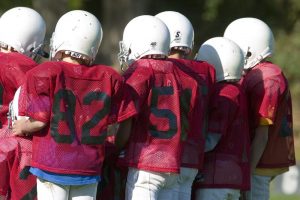
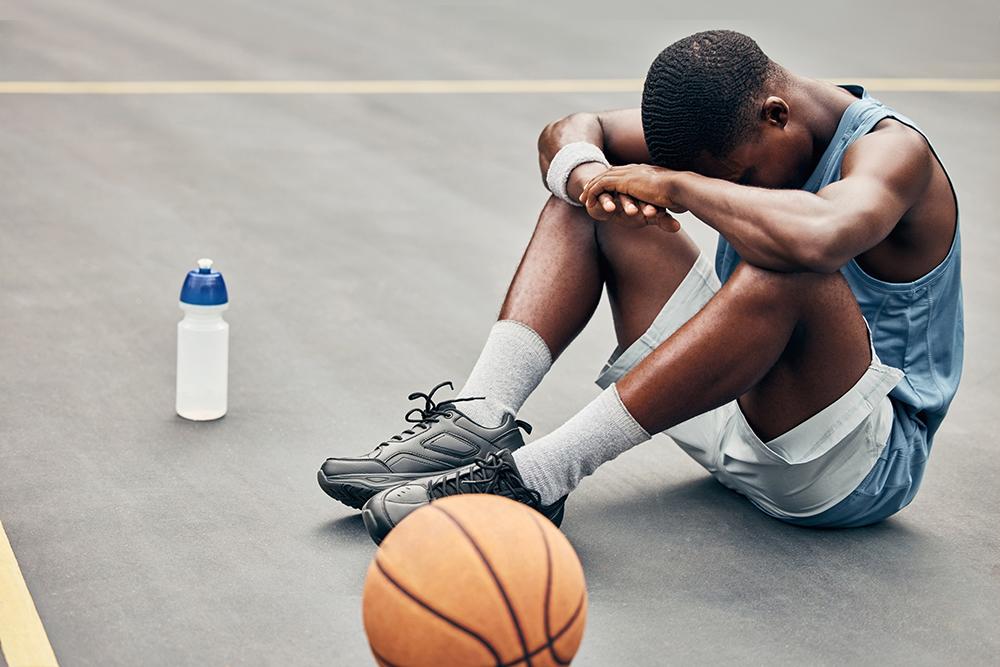
Now more than ever, young athletes are feeling pressure: Pressure to perform in sport, to have a certain image on social media, to get good grades, to do extracurricular activities, and to get into a certain school on a scholarship. These pressures often lead to performance anxiety, which can decrease performance.
 “The irony is that the more anxiety we’re putting on these kids, the worse they’re going to play,” says TrueSport Expert Kevin Chapman, PhD, clinical psychologist and founder of The Kentucky Center for Anxiety and Related Disorders. “So when we’re intentionally or unintentionally adding pressure, we’re actually making things much worse.”
Remember, as a parent or a coach, this is not necessarily about intentionally creating a pressure-filled environment for an athlete by saying things like, ‘You need to win the championships or you’ll never get into college.’ But you may be doing things that cause an athlete to perceive a significant need to do well in order to get a certain scholarship. And thanks to technology, perceived pressure from seeing others succeeding on social media has caused performance anxiety to spike even more.
Here, we’re looking at the most common sources of perceived pressure that cause an athlete’s performance anxiety to increase.
1. Perceived pressure from social media
“The advent of social media and the rise in usage for teens and preteens has led to a huge amount of pressure on athletes,” says Chapman. “When you’re posting on multiple social media platforms, that increases the likelihood of scrutiny. You’re also seeing more competition than you ever would have seen prior to social media. Because of that, social media has become one of the main impetus for performance anxiety in younger athletes.”
2. Perceived pressure from an increase in metrics for comparison
 While technology has allowed for a huge amount of improvement in sport thanks to everything from sleep tracking to heart rate data, this influx of information can be a double-edged sword for athletes who can now quantify nearly every piece of their athletic life. And they can also see how they compare to their teammates and competitors. “Not only are athletes seeing other athletes from around the country playing on social media, they can compare detailed metrics on other apps,” says Chapman. “You can quickly see how fast you are compared to any athlete around the country, not just your teammates.”
3. Perceived pressure to play more
The structure of youth sport itself has changed in recent years as well, and it’s caused a huge amount of performance anxiety for young athletes. Now, with school and club and travel teams, athletes can be competing multiple times per week, training multiple times per day, and dealing with pressure to perform not just from one coach or one team, but from multiple coaches and teams. “Athletes are also now encouraged to spend money on private lessons with experts, working on individual skills,” adds Chapman. “For athletes who can afford it, this can actually increase performance anxiety because now there’s an expectation to perform. Meanwhile, athletes who can’t afford extra lessons with a professional feel anxiety that they’re missing an important step in their development.”
4. Perceived pressure to fit a coach’s mold
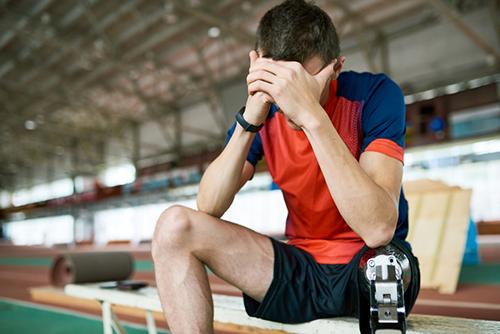 Coaches may have the best intentions, but many unintentionally set expectations for conformity on their teams. Coaches tend to have an ‘ideal athlete’ in mind who has a certain set of qualities and skills, both athletic and interpersonal, and if an athlete doesn’t conform to that set of standards, the coach may subtly exert pressure on them to fit that mold. “Coaches can mistakenly view athletes as a homogenous group, but that’s a trap,” says Chapman. “Many of these athletes come from different racial and ethnic backgrounds, and they have distinct cultural identities. But in most sports environments, we have this perception that athletes all share one identity.”
5. Perceived pressure for the future
Parents can unintentionally or intentionally pressure young athletes in many ways. From the more obvious examples like shouting on the sidelines at practices and games to discussing how helpful it would be if a young athlete could get an athletic scholarship, pressure from parents is a large part of what causes performance anxiety in athletes. This happens most often when a parent is living vicariously through their child, says Chapman. “Parents are one of the primary causes of anxiety for youth because athletes don’t just feel that pressure in what you say to them, but in how you act,” he adds. “Anxiety is transmitted from parent to child via observational learning and informational transmission. Even well-intentioned mentions of how much a scholarship would help can communicate distress to a child.”
6. Perceived pressure to perform, rather than progress
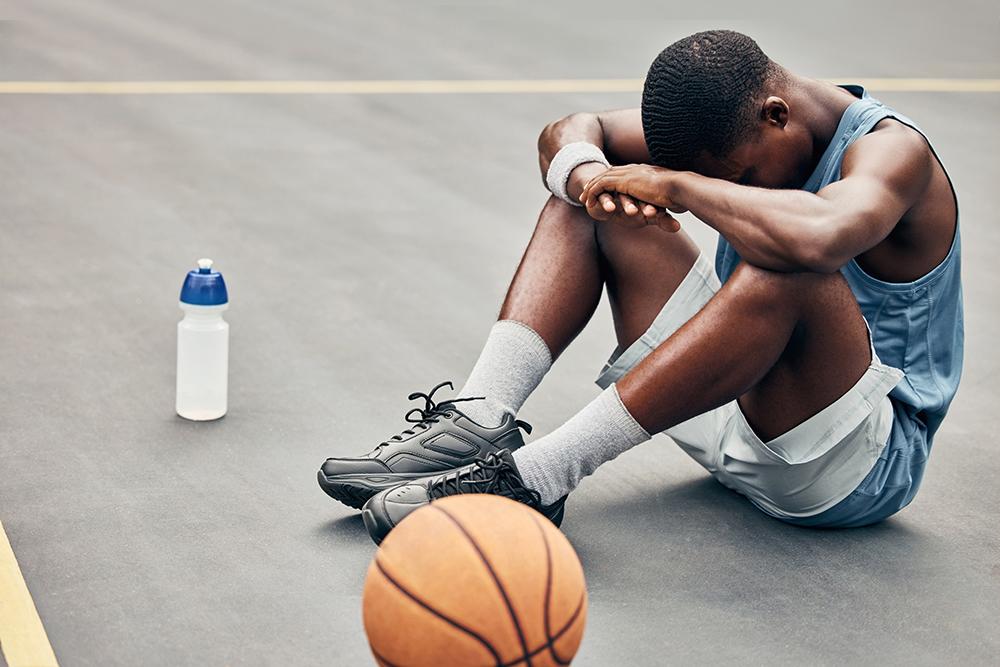 In every part of an athlete’s life, there is pressure to perform, to win, to achieve a certain outcome. This pressure comes from how we are all raised in society today: We are in a culture where achievements are considered much more important than making progress towards a goal. “We live in an outcome driven society,” says Chapman. “We are motivated by high achievement in this country. Because there’s so much pressure to perform in an outcome-based society, a lot of athletes end up believing that they have to do everything it takes to achieve so that they can go to the next level.” While you won’t be able to change society at large for your athlete, you can help them focus on their process, rather than their outcome.
________________________
Takeaway
Perceived pressures come from every angle for young athletes: from coaches, peers, parents, social media, and society at large. These pressures can lead to an increase in performance anxiety, which can ironically lead to a decrease in performance. Understanding the pressures that an athlete feels can help you as a parent or coach ensure that athletes feel supported rather than pressured.