
For young athletes, pressure doesn’t always end when practice does. Social media, performance feedback, and stories told about success can keep athletes connected to expectations long after they leave the field of play. At 2026 TrueSport Talks, those challenges framed a day focused on protecting athlete mental wellness and preserving the joy, connection, and growth that make sport meaningful.
Broadcast live from the U.S. Olympic & Paralympic Museum on November 4, the event brought together athletes, mental health experts, medical professionals, and media voices to explore the relationship between digital culture, storytelling, and athlete well-being. Four themes emerged from this year’s symposium and connected those conversations to practical action: “Shape the Story,” “Disconnect to Reconnect,” “Protect Your Battery,” and “Master Your Mind Moves.”
Shape the Story: See the Person Beyond the Performance
What happens when an athlete’s story centers only on results? The event’s storytelling sessions addressed the importance of recognizing the person behind the performance and considering how public narratives influence athletes’ understanding of themselves.
“Beyond the Podium: Lessons from the 2026 Winter Games on Telling the Whole Athlete Story” brought together moderator Jessica Bartley, PsyD, and Team USA athletes Jessie Diggins, OLY, Maxim Naumov, OLY, and Jack Wallace, PLY. The session connected stories of pressure, setbacks, and success at the elite level to the experiences of developing athletes and the adults supporting them.
Diggins shared, “The people who mind, don’t matter. And the people who matter don’t mind.” The reminder challenged the pressure to be constantly available or responsive online and reinforced the value of focusing on the people and relationships that genuinely support your well-being.
That focus continued in “Media, Myths, and Mental Wellness: How Storytelling Shapes Sport Culture,” moderated by Senior Director of TrueSport & Awareness, Jennifer Royer, PhD, alongside Steve Borelli and Christine Brennan from USA Today, USADA Board of Directors Vice Chair and Olympian Kara Goucher, and Kate Hartman Rosenzweig, USOPC Chief External Affairs Officer. The session examined how messages about toughness, perfection, and success can shape sport environments, and how more intentional storytelling can support resilience, psychological safety, and help-seeking.
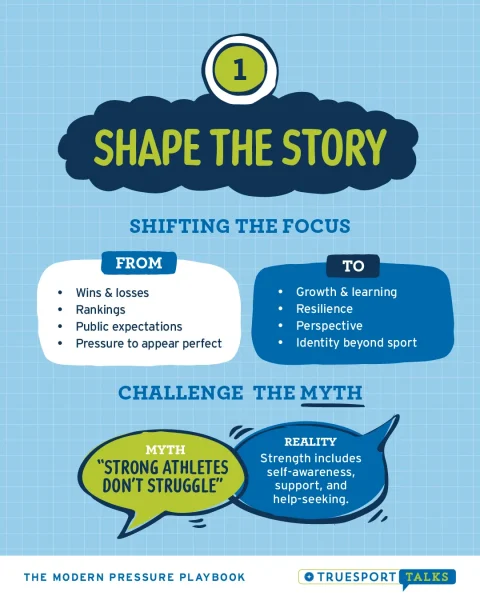
A key takeaway from both sessions was the importance of seeing athletes as people first, not just performers. Move beyond wins, losses, rankings, and the pressure to appear perfect. Make room for growth, learning, resilience, and identity beyond sport. The conversations also challenged the myth that strong athletes don’t struggle, recognizing self-awareness and seeking support as parts of strength.
Disconnect to Reconnect: Create Space for Healthier Digital Habits
The workshop “Always On: Hyperconnectivity, Social Media Pressure, and the New Performance Environment” turned attention to a sport experience shaped by constant visibility. Featuring TrueSport Expert Deborah Gilboa, MD, Trevon Jenifer, PLY, and Mya Wilson, the session addressed pressures associated with social media, recruiting platforms, performance data, and emerging technologies, including AI-generated and manipulated content. Its focus included setting boundaries and protecting trust in an increasingly connected environment.
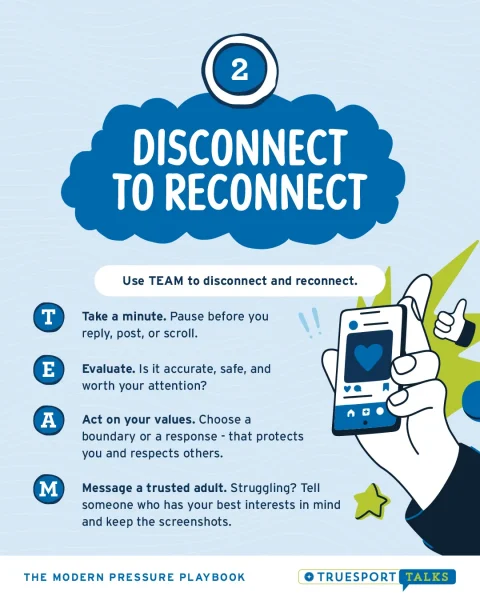
The “Disconnect to Reconnect” theme translated those concerns into a practical framework athletes can use before engaging online. The TEAM approach encouraged athletes to:
- Take a minute before replying, posting, or scrolling.
- Evaluate whether content is accurate, safe, and worth their attention.
- Act on their values by choosing a response or boundary that protects themselves and respects others.
- Message a trusted adult when struggling and keep screenshots of concerning interactions.
Rather than treating every notification or comment as something that requires an immediate response, the framework creates space to pause, assess, and seek support.
Protect Your Battery: Make Recovery Part of the Plan
Digital pressure also has a physical dimension. In “Wired and Tired: The Mind-Body Cost of an Evolving Sport Landscape,” TrueSport Expert Michele LaBotz, MD, FAAP, and Jeffrey Durmer, MD, PhD, addressed the connections between constant connectivity, sleep, recovery, body image pressures, and ongoing exposure to performance feedback. The workshop focused on healthier digital habits and strategies to support sustainable performance.
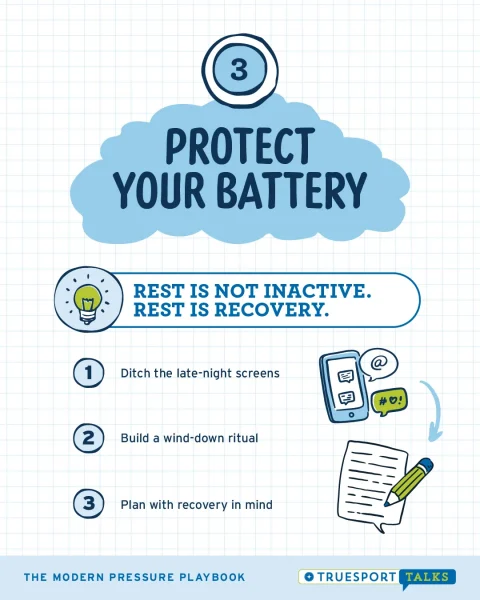
The corresponding “Protect Your Battery” message put recovery at the center of athlete preparation: Rest is recovery, not inactivity. The guidance encouraged athletes and their support teams to plan with recovery in mind, build a wind-down ritual, and step away from late-night screens.
This theme broadened the conversation beyond what athletes do during training to include whether their daily routines leave enough room to recover.
Master Your Mind Moves: Practice the Response to Pressure
The final workshop, “The Modern Pressure Playbook: Your Emotional Regulation Toolkit,” focused on how athletes respond when pressure arrives. Led by TrueSport Expert Kevin Chapman, PhD, the session centered on accessible strategies such as journaling, elite self-talk, pre-performance routines, and recovery rituals to support emotional regulation and mental wellness.
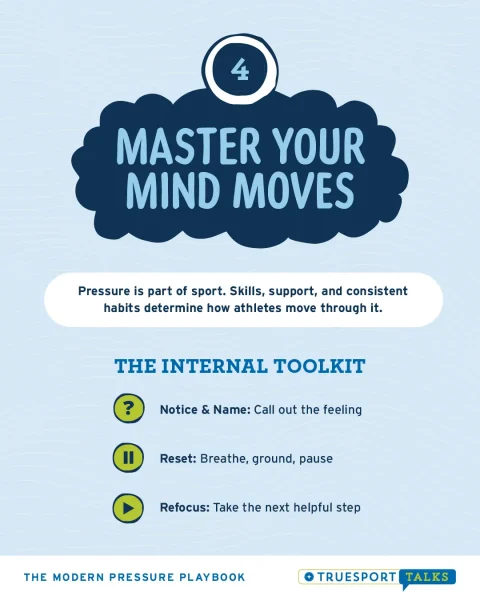
“Master Your Mind Moves” distilled that work into three steps:
- Notice and name the feeling.
- Reset by breathing, grounding, or pausing.
- Refocus on the next helpful step.
The emphasis was not on eliminating every difficult emotion. Instead, the approach focused on building skills, support, and consistent habits that help athletes move through pressure.
A Shared Responsibility for Healthier Sport
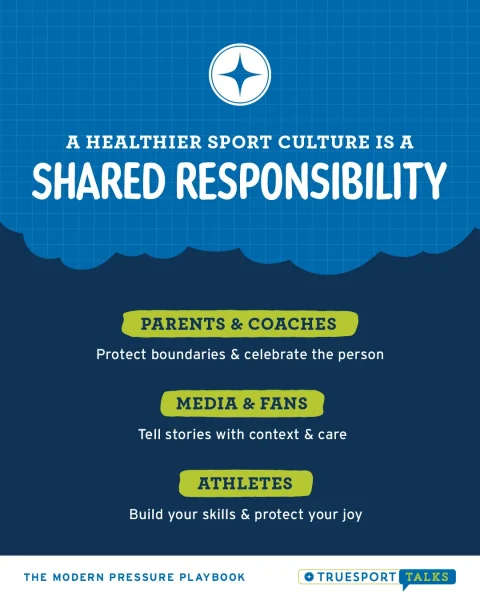
Together, the four themes connected the stories athletes hear, the digital environments they navigate, the recovery they need, and the mental skills they practice. The playbook also made clear that athletes should not carry this work alone: Parents and coaches can protect boundaries and celebrate the person; media and fans can tell stories with context and care; and athletes can build skills while protecting their joy.
That shared responsibility offers a practical direction for youth sport, one that supports performance without losing sight of the person pursuing it.