
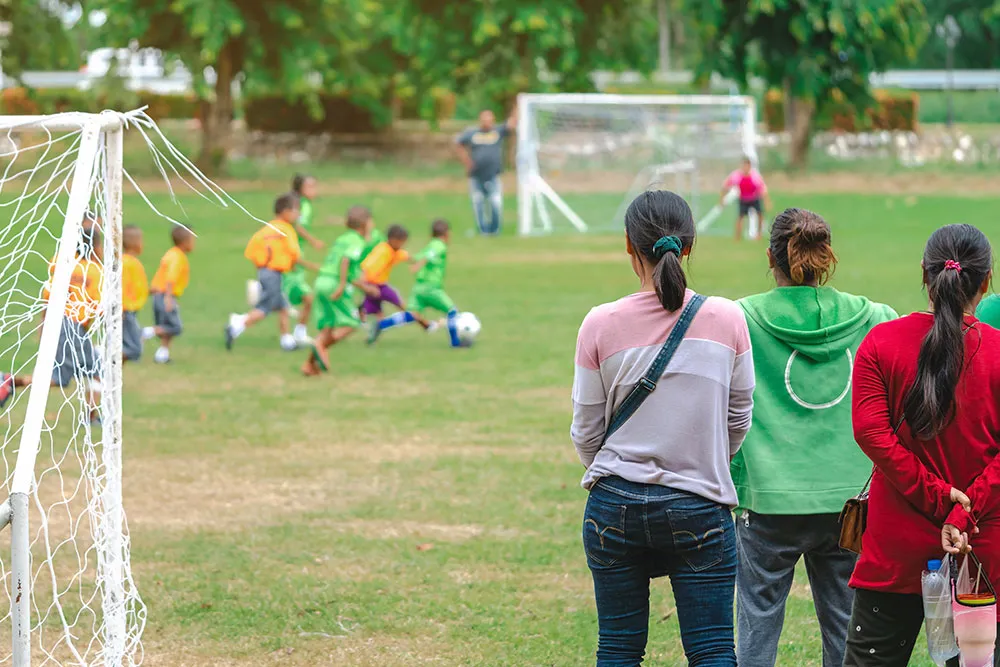
Establishing an effective, positive relationship with your young athlete’s coach can be easy, and at other times, it can feel like a complicated struggle. Here, TrueSport Expert Keith Barnett, a longtime volleyball coach and recruiter, former player, and father to a current high school athlete, shares his best tips for creating an effective coach/caregiver relationship that helps your athlete succeed.
1. Start as early as possible
It’s important to establish communication early in the season, and ideally, even before the season officially begins. It’s much harder for a coach to make space for parents during the busiest times of the season, yet often, caregivers wait until they’re at competitions to connect with them. Barnett explains that an early introduction to the coach can help lay a strong foundation for an effective relationship because you’re getting to know each other before any stressors are at play.
To open the conversation, start on a positive note. “Tell them good job after a game or practice and ask if there’s anything that they need from parents in terms of support,” says Barnett. “You can ask a lot of questions, but also understand that the coach may not have the bandwidth to answer them at that exact moment.”
2. Understand the coach’s expectations and processes
“Every coach is different,” says Barnett. “Every coach has a different style, along with a different set of boundaries, processes, and expectations for what their relationship with caregivers looks like.” For example, some coaches may encourage parents to come to practice or attend every game, while other coaches prefer that caregivers take a more hands-off approach. Some coaches are happy to have parents close to the field during games, while others prefer them to stay high up in the stands.
Ideally, these expectations are expressly laid out by the coach at the beginning of the season, but if you’re unsure of what you should be doing, don’t be afraid to ask for clarification in an appropriate moment.
3. Ask how they want you to communicate
Many coaches outline their communication preferences at the start of the season and it’s an important sign of respect to uphold those boundaries. Barnett notes that coaches truly appreciate this small detail.
In addition, you may need to seek further clarification. Does the coach prefer the athlete to be the one to reach out via email, or are they okay with you sending a message on WhatsApp? Is there a Facebook group, or other communication platform, for caregivers?
4. Ask the coach how you can support them and the program
It’s important to remember that many coaches, especially at the high school level and below, are part-time coaches. They are often full-time teachers or coaching at multiple places to make ends meet, which makes it difficult to juggle a wide range of competing priorities.
The best way to support coaches and establish a positive relationship is to ask where they need help, says Barnett. If you commit to a volunteer task, follow through reliably.
In cases where a coach seems stretched thin, consider coming forward with specific suggestions and concrete ideas around how you can help rather than an open-ended offer. Filming competitions so the team can review playback, bringing snacks, or coordinating carpools for away games are all great ways to help.
5. Remember that you’re only seeing a small percentage of interactions and hearing one side
What a caregiver sees at practice or on game day is only a small part of the whole, and it’s important to remember that, says Barnett. You might see the coach shouting at the team and immediately jump to the conclusion that they’re too aggressive. In reality, they might simply be yelling to be heard over the wind or are trying to pump up the team before the second half of the game. As the caregiver, try to assume best intentions and follow up at the appropriate time to discuss any concerns. That said, concerns about athlete safety, bullying, discrimination, or inappropriate conduct should be taken seriously and addressed through the appropriate reporting channels.
6. How to have hard conversations
Even a strong caregiver/coach relationship can require hard conversations. Whether it’s about teammate conflict, playing time, or scheduling conflicts, difficult conversations are likely to arise over the course of a season.
Here are some best practices when it comes to having hard conversations:
- Give it 24 hours. Avoid approaching a coach immediately after a game or competition, when emotions may be high for everyone. Take time to cool down, talk with your athlete, and identify the specific concern you want to address.
- Choose a face-to-face conversation when possible. For sensitive concerns, a private, scheduled conversation is often more productive than an emotional post-game exchange or a long text message.
7. Get clear on the situation and what your athlete wants
Before opening a hard conversation with your athlete’s coach, discuss the issue with your athlete and try to first get as many facts as possible. Depending on the situation and the age of your athlete, it may also be more appropriate for your athlete to handle the hard conversation. Caregivers often forget that sport is one of the first opportunities that youth have for independence, and sport provides a great opportunity for them to advocate for themselves.
Another option is for everyone to meet together. During the meeting, try to let your athlete lead the conversation as much as possible, with you simply there in a supporting role.
If you do decide to approach the coach alone, get aligned with your athlete on the goals and desired outcome of the conversation.
8. Don’t underestimate the value of repair
It’s no secret that sport can elevate emotions, which is why the ability to repair is so important to the coach/caregiver relationship.
“It’s important to be self-aware enough to know that you said or wrote something to the coach that wasn’t helpful,” says Barnett. “A lot of people aren’t good at apologizing, but if you’re able to tell the coach that you’re sorry for what you said, that can go a long way toward keeping a relationship intact.”