
 Youth sport has many stakeholders, ranging from the athletes themselves to their caregivers, coaches, sports organizers, and communities. While all those roles come with their own challenges, the role of schools or communities in helping to develop healthy youth sports can be especially complex.
A recent recommendations report from TrueSport detailed the ways different stakeholders can best serve young athletes in terms of mental wellness, and included recommendations for those systems and communities. Here, one of the authors of the report—widely recognized sports sociologist Jay Coakley, PhD,—and Jennifer Royer, PhD, Senior Director of TrueSport and Awareness at USADA, share the tangible ways communities* and systems can best support mental wellness for student-athletes.
1. Understand the impact an organization can have
“We have to have a healthy system in order to have healthy athletes,” explains Royer. “We need the tools to teach athletes resiliency, self-confidence, and self-advocacy. If we don’t have that in place at the systemic level, it’s really difficult to successfully support athletes.”
“I think it’s important to focus on restructuring youth sports, rather than dealing with individual issues here and there,” adds Coakley. While a coach may have a direct impact on their athletes, we will see more lasting and durable change from the community and larger systems.
2. Understand your responsibility as an organization
 As the report lays out, individuals like coaches, families, and athletic trainers can actively support young athletes, but organizations are tasked with making broader changes at the policy level and then executing and enforcing those policies. Mental wellness as a complement to physical wellbeing for athletes must be the highest prioritization for any organization working with or supporting young athletes. Seeing each individual athlete as a human being who needs to be addressed in the broader context of their humanity rather than solely for their prowess on the playing field must be the starting point for any stakeholder in youth sports.
3. Understand the pressures that student-athletes face
“We have to recognize that this group of young people is not experiencing life, culture, sport, school, or work the same way as past generations,” says Royer. “Everything is different, including the fact that they live in an entirely global society that is more transparent because of social media. We have to advocate for athletes differently because they are living in a different world now. And sport has to be different going forward, or it stands to lose the participation of all these young people.”
4. Understand the importance of youth sport accessibility
 Given that sport is a potentially crucial protective factor in many young people’s lives, ensuring access becomes a key step in addressing mental wellbeing for our children. As youth sports have gotten progressively more privatized and expensive, communities and larger systems can play an important role in improving access to sport for all young people, regardless of income status. The report notes that creating partnerships between public and private sport organizations as well as sport governing bodies may be key in helping bridge the gaps in sports participation.
This is best done at a systemic level: On a small scale, a private club coach may connect with a high school coach to help student-athletes coordinate training and competing for two teams. But that doesn’t address the issues of pressure and access that are facing many more athletes within that same system.
5. Understand the individualism of each athlete
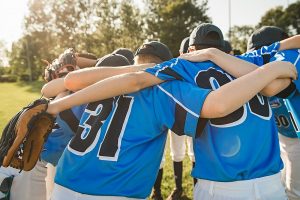
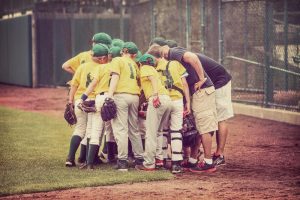
It’s easy to see youth sports as a singular mass. A baseball team, for example, may seem like a singular entity. But in reality, it’s a group of individual teens with entirely different life experiences and stressors. As a community stakeholder, understanding that each athlete has a different cultural context, a different family or financial situation, and a different set of thoughts and feelings is key. And regardless of the economics in the community, statistics indicate that young athletes are likely to be struggling with their mental wellness.
Sport can’t help these individual athletes build resilience and healthy tools for managing emotion if they continue to drop out at alarming rates. “The report supported the assertion that in an advantaged situation where families could afford the pay-to-play model, athletes are facing burnout and anxiety and leaving sport,” says Royer. “Conversely, athletes in challenging economic situations aren’t getting the opportunities to play because they can’t keep up with the financial demands of individual coaching, year-round instruction, or travel for competitions.”
6. Understand what’s needed in your community
 The report points out that looking for unconventional solutions to difficult problems—like the ability to use a local community center or gym after hours for practice time or providing public funding for sport—can help begin to solve the overarching problem of accessibility to sport. If your area is economically diverse, this can be even tougher to reconcile, as some athletes will have access to private clubs and travel teams, while other athletes may be struggling to find a place to simply train or practice. Look for ways to bring communities together and pool resources. The more athletes we can keep engaged in sport, the greater our chances to support healthy development and growth.
7. Understand that support should come from multiple sources
Even if you believe that the area you’re in has a thriving, healthy youth sport community, there are always more ways that you can support athletes. Remember, each athlete has unique needs. And beyond the current young athletes already participating in sport, there is a huge percentage of the youth population who aren’t playing a sport because of various external and internal factors. “Athletes get their support from multiple sources,” says Coakley. “Support doesn’t only come from one place. It’s best if it comes from multiple places.”
______________________________
Takeaway
The overall health of a youth sport program is dependent upon organizations and communities taking responsibility and creating change. Most importantly, systems need to prioritize athlete wellness alongside performance, find ways to support access to sport, and recognize the individual needs of athletes.
* Note: We’re using ‘organization’ and ‘community’ interchangeably here and are simply referring to any larger-scale group that has a stake in youth sport and the general health and wellbeing of children.