 There are thousands of football helmets on the market today, and finding the right one for your young athlete can be a moving target. A 2021 study even found that 71.4% of helmets were fit improperly for youth football players (ages 7-12).
The good news is that there are new safety standards coming into play from the National Operating Committee on Standards for Athletic Equipment (NOCSAE), but style, size, and fit are also critically important when it comes to your athlete’s safety. And unfortunately, it can get confusing and expensive.
TrueSport Expert Dennis Coonan, MSE, LAT, ATC, Manager of the Sports Medicine Center and athletic trainer at Children’s Hospital Colorado, breaks it down for parents and coaches—from updated safety standards to concussion myths and smart price checks.
NOCSAE Certification
“Helmet technology is always advancing,” Coonan says. “You look back at helmets on the market even 20 years ago, and you kind of shudder to think that’s what people were wearing to protect themselves. There has been progress in a variety of ways; for example, there are a lot more ways to customize the fit now and that makes a big difference. Helmets have also become lighter weight in some ways, so that helps. And they’ve created new types of impact zones that help deflect some of the force going to the skull.”
When it comes to youth sport, NOCSAE released the first youth football helmet standard (ND006) on February 7, 2025, effective September 1, 2027, targeting risks like impact frequency, type, location, and force for players under high school age. The helmet must weigh no more than 3.5 pounds, including the facemask and any attachments, and it must be meet a standard that limits how quickly a head can rotate/twist during an impact.
When shopping for a helmet, look for the “Meets NOCSAE Standards” label (details here). “If a helmet has that NOCSAE label on it, it has gone through rigorous testing to meet those safety standards,” says Coonan. Until 2027, you can check the Safety Equipment Institute site for compliant models.
The Purpose of a Helmet
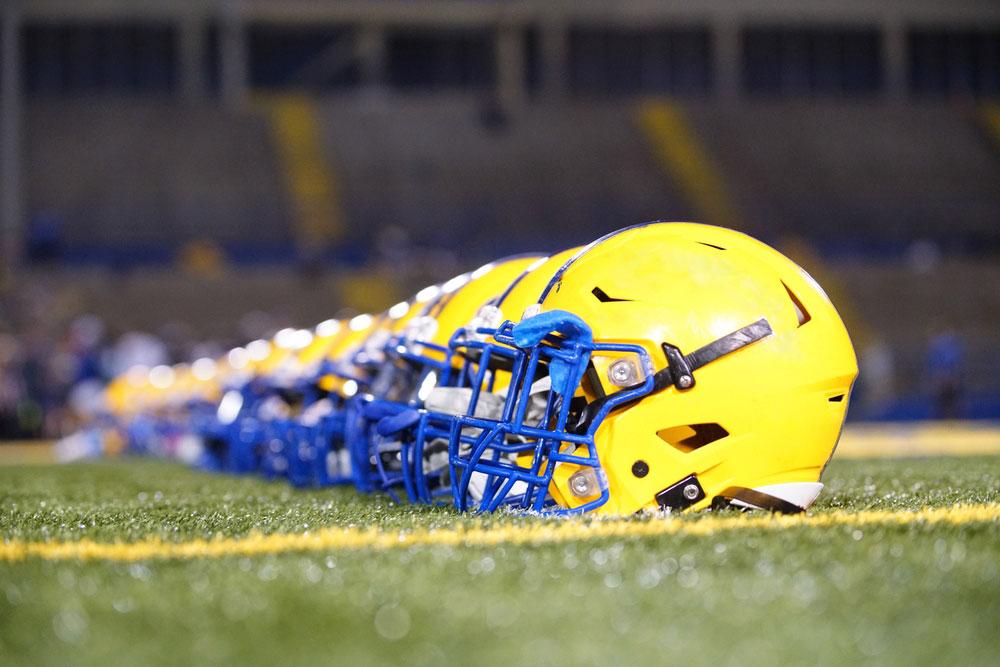 It’s important that caregivers understand what a football helmet is designed to do—and what it isn’t. “A football helmet, just like any other helmet for athletics, is designed to minimize significant injury to the skull, including fractures, lacerations, and contusions,” says Coonan. “It is not preventing concussions, despite popular belief. And that is often a misnomer, where people think that if they buy the top of the line helmet, then their kid is going to be protected from concussions. There is no research that shows that helmets protect from concussion. They do protect from other head injuries, though.”
He adds that some brands will mention things like “decreasing force on the head” when marketing their football helmet. But as Coonan explains, “You can add as much padding as you want on the outside, but the reality is that the head moves around when it’s impacted and the brain essentially sloshes around and slams into the skull, which is how concussions occur. There’s no technology that will stop the slosh.”
Helmet Style
Different positions need specific styles. For example, “There are different face masks for different positions,” Coonan explains. So, in addition to checking for the NOCSAE seal, make sure that the helmet is suitable for the position that they’re playing.
Youth helmets also differ from adult ones. “Somebody who’s 18 versus a kid who’s 12 will have very different needs for a helmet,” says Coonan. “Just because your athlete saw their favorite player wearing a certain helmet doesn’t mean it’s the right choice for your athlete.”
Helmet Weight
Weight matters, especially for kids, as heavier helmets strain kids’ weaker necks. “Younger kids have weaker neck muscles, and a heavier helmet can fatigue the neck,” says Coonan. “When neck fatigue starts, the neck starts to drop a little bit, and they start losing form when they’re tackling or when they’re getting tackled. And there’s also a correlation between neck strength and concussion risk. Some studies show that a stronger neck can help protect the head from getting whipped around, and therefore lead to less concussion risk, but if your neck has been fatigued from a helmet that’s too heavy, it can potentially lead to an increased risk of concussion.”
Given this data, new standards keep youth helmets under 3.5 pounds to help address the issue.
Helmet Fit
Fit is perhaps the most nuanced of the helmet choice issues, and it’s critically important. A helmet that is too big or too small will not provide the same level of protection as a helmet that is correctly fitted to your athlete’s head.
Here are a few tips to ensure a helmet will fit properly:
- Because an athlete’s head is likely to be sweaty during play, Coonan suggests dampening their hair (regardless of hair length or type) before trying on helmets. This gives you a more accurate sense of fit, since an athlete with thick, curly hair might need a larger size when dry but would size down when hair is wet.
- If you’re buying online, start with a fresh measurement. Use a soft tape measure to measure the circumference of your athlete’s head one inch above the eyebrows, and compare that to the size chart, says Coonan. You may be surprised at how quickly kids grow, including their skulls.
- When a helmet fits correctly, several checkpoints should line up. The front of the helmet should sit about two finger widths above the eyebrow, and the back should cover the entire skull, Coonan says. The ear holes should align with your athlete’s ears, and the cheek pads should be snug but not painfully tight. Many helmets use inflation bladders—small sacs of air—to tighten the helmet for a snug fit, so test that those work properly. The chin strap should be tight enough that the chin sits firmly in the chin cup. Once the helmet feels properly adjusted, try moving it up and down and side to side; it should stay in place.
Shop Smart
Coonan also stresses the importance of being a smart shopper and offers the following advice:
- Understand the price range before you shop. Helmets come in a wide range of prices, and Coonan says that parents can expect to spend anywhere from $100 to over $800 for a helmet that meets NOCSAE safety standards. A helmet that is significantly cheaper than that is likely too good to be true.
- Think carefully before buying secondhand. While secondhand can be an option, especially on a tight budget, Coonan generally recommends against buying a used helmet, since you don’t know what hits that helmet has already sustained. If cost is a concern, he suggests reaching out to the helmet manufacturer or a local sporting goods store, or checking whether local sports foundations or community groups are doing equipment giveaways. Coaches may also have a few helmets from past seasons that athletes can use.
- Be picky about online sources. If you buy online, choose reputable sources only. Coonan recommends going directly to the helmet manufacturer or to a well-known sports-specific retailer. Large marketplaces like Amazon can carry helmets that don’t meet safety standards, are counterfeit, or are simply mislabeled. Additionally, review return and warranty policies, since you may need to swap sizes, and knowing the replacement policy if the helmet is damaged can save you money in the long run.
Replacement Time
At some point, you will need to replace your athlete’s helmet, often after one to three seasons in youth sport, says Coonan. Kids grow quickly, so a helmet that fit perfectly last season may now be too small—or, if they’ve changed hairstyles, it might even be too big. Before every season, check that the helmet still fits correctly, and if it can’t be safely adjusted, it’s time to shop for a new one. You should also consider wear and tear: Look at the straps, clips, and air bladders, and inspect the shell for any signs of damage. While football helmets are designed to handle multiple hits, they can still be compromised after a hard impact.
“After a helmet has been produced, it has about a 10-year lifespan if it’s not being used,” says Coonan. “If it’s being used on a regular basis, there’s about a two to three-year lifespan.” He adds that it can be hard to see all the damage done to helmets, so it’s not a bad idea to get a new one most seasons—especially if your athlete plays a position that takes a lot of hits or they tend to be rough on gear.
___________________________
Takeaway
New football helmet standards for youth below high school age were introduced by the National Operating Committee on Standards for Athletic Equipment (NOCSAE). Youth helmets are now required to weigh under 3.5 pounds and have features specific to the risks of youth athletes. For the safest football helmet for your athlete, look for the NOCSAE seal, and ensure that the helmet itself is the right style and fit for your athlete.