

Chris Mazdzer is no stranger to goal setting. The now-retired luge athlete competed in four winter Olympic Games, winning the silver medal in 2018 and becoming the first non-European racer to ever medal in the men’s single luge. Since he retired from the sport two years ago, he’s only become clearer on the best ways to set goals that are actually achievable at any level of sport.
Growing up in Lake Placid in upstate New York gave Mazdzer a firsthand view of the work that went into actually achieving an athletic goal. Home to many Olympians, Lake Placid is a primary training ground for elite winter sports because an Olympic Training Center is located there. “If you walk down Main Street in Lake Placid, you’re probably going to run into an Olympian, and I was very fortunate that I learned at a young age that Olympians aren’t superheroes. There’s nothing super about us: We’re ordinary people, just living and training. What I learned was that Olympians set themselves apart because they set goals, and more importantly, they do the little things every single day in order to bring those goals closer. They just work relentlessly to achieve them.”
He often speaks to young athletes about the example of the Terra Nova Expedition to the South Pole in 1911. There were two teams of explorers, led by Roald Amundsen and Robert Falcon Scott. Amundsen’s team took the approach of hiking 20 miles every day, regardless of weather. Scott’s team based their mileage on the weather conditions, with some days spent hiking much further than 20 miles, some days spent resting. Amundsen’s team won the race by five weeks. Scott’s team made it to the South Pole, but none survived the journey back.
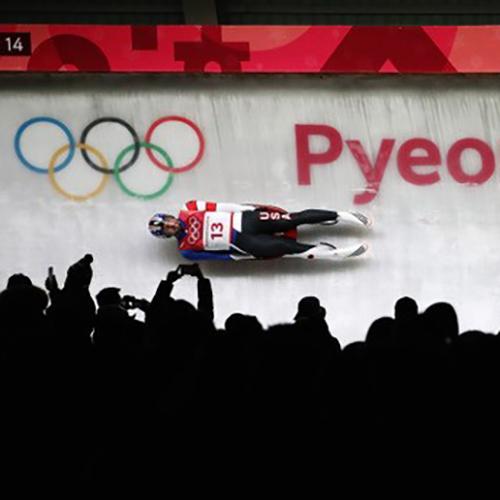 To Mazdzer, this piece of expedition history perfectly encapsulates the idea of doing a little bit, a lot of the time. “Doing something every day is more important than doing a lot, some of the time,” he says. “For example, if you want to get strong, you’re not going to go to the gym for five hours one day a week. It’s obviously better to work out one hour five times a week. And that’s the part of goal setting that is often missed…the commitment to consistency.”
“Anyone can set goals, anyone can write things down, but once you’ve set the goal, what are the ongoing things you need to do to accomplish the big goal?” he adds. “Being able to break a goal down to the daily actions is the key.”
Consistency with daily actions doesn’t always mean doing the same thing every single day, though. Mazdzer gives the example of a skier trying to get prepared for the upcoming season in the summer months. “Step one shouldn’t be ‘wait for snow,'” he says. “If that’s what your goal setting looks like, you’re missing out on a lot of chances to get closer to your goal. Instead of waiting for snow to practice, what else can you do on a daily basis? You can get stronger in the gym. You can dial in your gear and figure out the best setup for your skis for different conditions. If you don’t go into the granular details of goal setting, then those aren’t goals, they’re just dreams.”
Keeping an eye on the big goal—making the team, winning the race—is still key, though. “You do need to have that big goal, that shiny thing that you are always aiming towards, because that helps you stay in alignment,” Mazdzer says. “The monotony of those small daily actions can get really boring, so to stay motivated, you do need that big goal to work towards.”
 There’s also a side benefit of defining the smaller goals and daily actions you can take to achieve your big goal, Mazdzer adds. Not every goal is going to be achieved: Sport is ultimately defined by failure, even the greatest athletes of all time didn’t win every race or make every team. But the reason they were able to keep pushing towards their next goal was because they saw enough small successes and daily wins along the way to feel motivated even when the big goal didn’t work out.
Mazdzer himself has a great example of this: In his Olympic career, his goal was always to finish in a medal position. But he only medaled in one of the four Olympic Games he competed in. Did his goal or his approach look different in the year he finished in the silver medal position? No. And that’s the point.
“Even if you give 100%—doing those daily actions and accomplishing all of the things you need to in order to theoretically hit that goal—you don’t always get 100% back,” he says. “There were many years when I was giving 100% but getting 10% back, and I’d wonder if I was doing something wrong. But a lot of the time, nothing is actually wrong. There are circumstances out of your control, whether it’s equipment or weather conditions or other teams. Success in sport often depends on things that you can’t control, and it’s easy to give up in those moments. But through consistency, through dedication, you can keep trying. You just have to understand that your results don’t always reflect the input.”
Being able to come back from missing your goal and get back to the daily commitments is what Mazdzer defines as a strong, resilient athlete.
___________________________
Takeaway
Get clear on your big goal, write it down, and then work backwards. Once you know what goal you are trying to accomplish, break it down into actionable, measurable pieces. Mazdzer suggests doing something every single day to achieve your goals, even after failure.