 Talking about nutrition, especially to young athletes, can feel difficult. Your word choice can make a big difference and even the most casual conversations can have lasting impacts on your athletes.
Here, TrueSport Expert Stephanie Miezin, MS, a registered dietitian and board-certified specialist in sports dietetics, shares phrases that parents and coaches should avoid when talking about sports nutrition (and nutrition, weight, and health in general) with young athletes.
1. “Clean Eating” or “Clean Foods”
In recent years, ‘clean eating’ and ‘clean foods’ have become popular phrases used to suggest that something is healthy. But the phrase ‘clean’ doesn’t have a specific meaning, and Miezin worries that it’s a misleading term and can lead athletes to make choices that aren’t actually healthy for them! “Clean could mean you wiped a cereal box with bleach,” she says. “There’s no official definition of it, so food companies can use it to market products, and athletes can develop a misunderstanding of what actually fuels their training and growth.” In fact, new research has gone so far as to recommend that the phrase ‘clean’ be officially defined and regulated by the FDA because of the amount of misinformation it causes.
Instead: If you’re suggesting a food, rather than saying it’s ‘clean,’ get specific about why it’s a good addition to an athlete’s meal plan. For athletes especially, foods that will fuel them may not always be what is marketed as ‘clean.’ So rather than giving foods the label of clean or not, simply focus on what each food does and when it is optimal to consume. “A cookie can be the right thing to eat when you’re in the middle of a long run, or you’re in the middle of a game. The same cookie won’t be as healthy or helpful to eat at 10 p.m. With performance nutrition especially, the timing and the functionality of our foods at those different times plays a huge role in good nutrition.”
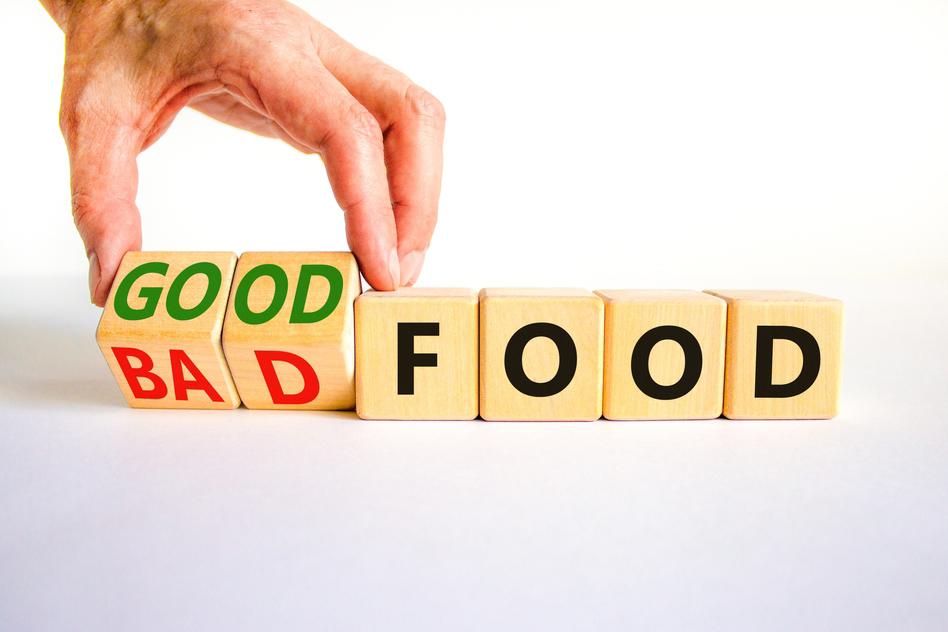
2. “Good Foods” and “Bad Foods”
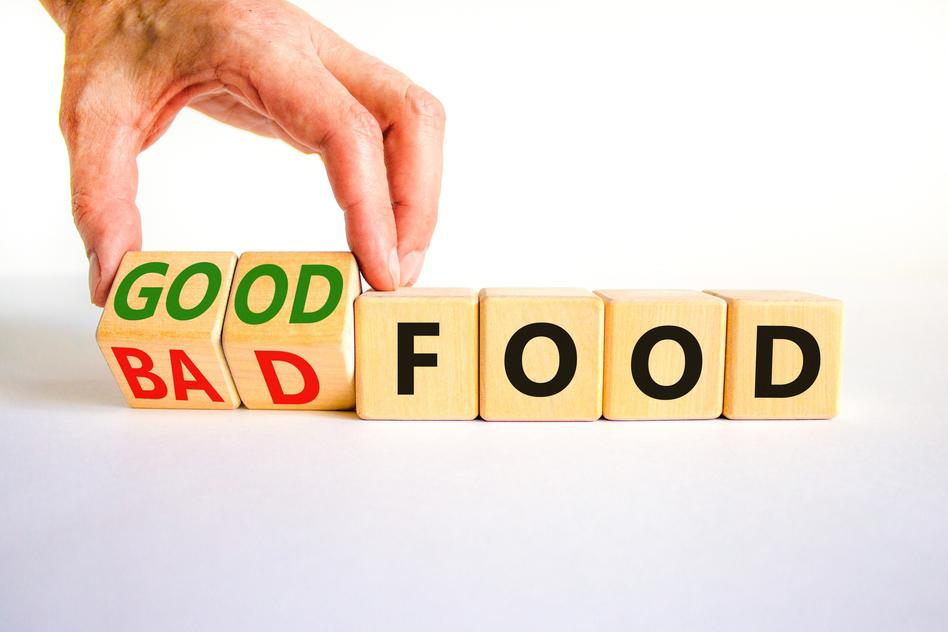 “Language that speaks to food in any sort of dichotomous black-and-white type of way is bad, especially for young athletes,” says Miezin. It can also be confusing: Think about diet culture in the past 30 years. How often have you been told by the media that fat was bad, then good, then bad, then good again? For a young athlete, this constant shifting of what’s considered a ‘good food’ can lead to disordered eating patterns like orthorexia.
Instead: “Nutrition research tells us time and time again that good nutrition is not about good or bad foods. Solid nutrition is about overall dietary pattern and how all the pieces of the puzzle fit together,” says Miezin. “Remove the subjective adjectives you’re using to describe a food and focus on the objective nutritional data. And if you do want to use adjectives, stay positive. We want to focus on words that are accurate and help improve an athlete’s relationship with food, such as balanced, nutritious, healthful, nourishing, energizing, and delicious.”
3. “Guilty Pleasures” or “Cheat Meals”
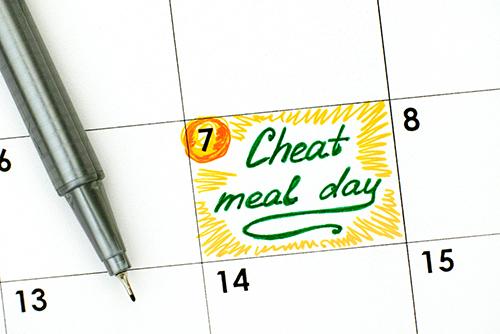 “Our perception of our food is shockingly important,” says Miezin. There was a study done that’s often referred to as the chocolate cake study. Researchers looked at the difference between someone who chooses the words ‘guilt’ versus ‘celebration’ when looking at a cake, and how using each word impacted the participants. The people who chose ‘guilt’ ended up having a heavier body weight over time or gaining weight despite trying to lose weight. A similar study done with milkshakes found that if we think a food is lower in calories, our hunger hormones react and make us stay hungry—even if the food actually has a high calorie content. “Associating any food with guilt can have long-term consequences that you may not expect,” Miezin adds.
Instead: “Thinking of meals as cheat meals or healthy meals is like saying a meal is good or bad,” says Miezin. “Try to remove that judgment from your food. Instead, athletes should learn to ask themselves, ‘How much is this meal supporting my health?'” With that mentality, a meal that used to be considered a ‘cheat meal’ might be viewed as a meal that’s getting an athlete much-needed carbohydrates for a long workout the next day.
4. “Calories”
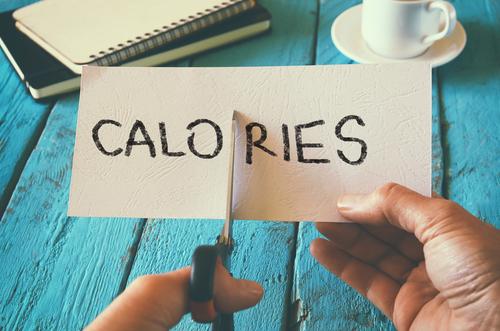 When we are talking about objective nutritional information, we often reference calories. “In America in particular, when we say the word calories, people get freaked out,” says Miezin. “This is especially true for young athletes with minimal nutritional knowledge. Their assumption is that calories are bad and they need less of them because calories will make them fat. But we obviously need calories to survive!” Still, referring to calories can be triggering, especially for athletes with a history of disordered eating.
Instead: Swap calories for ‘energy.’ “Ultimately, calories are only a measurement of energy, and people seem to connect better with energy as a positive thing that they want,” Miezin explains.
5. “Diet”
Yes, technically ‘diet’ can simply refer to the food that a person eats throughout the day, without attaching a positive or negative connotation to it. But in reality, the word ‘diet’ has become a loaded term, says Miezin, especially if you have an athlete struggling with disordered eating patterns.
Instead: Rather than using the word ‘diet,’ try ‘meal plan,’ or simply say ‘how X athlete eats’ rather than X athlete’s diet.
6. “Thin” or “Skinny” or “Fat” – or any language around how the body looks
“Using language that speaks to something about the body: shape, weight, anything like that, can be damaging,” says Miezin. “As coaches and parents, we should be focusing on our athletes’ health and performance, and we know that weight and body shape don’t necessarily determine health or performance.”
Instead: Focus on how athletes feel. Miezin suggests asking questions like: “How are you feeling? How is your energy today? Are you feeling strong? Are you feeling fatigued?” Those questions focus on the metrics that matter and lead to answers that provide a lot more important information.
____________________
Takeaway
How we talk about food and nutrition can make a big difference in how our athletes view the foods that they eat, as well as how they view themselves. Rather than using subjective terms or black-and-white phrases, you can help athletes develop a more positive and nuanced understanding of food and nutrition based on objective data and how food makes them feel.