Recovery strategies are increasingly trendy in the sports world, from new spa-like centers that feature ice baths, saunas, compression boots, and red-light therapies, to old staples like foam rollers and sports massage. But which recovery strategies really move the needle for athletes trying to optimize their recovery and performance?
Here, TrueSport Expert and the U.S. Anti-Doping Agency’s Science Director, Dr. Laura Lewis, explores what the science says about the trendiest recovery tools and shares the real secret to recovering as quickly as possible.
Ice baths and cold plunges
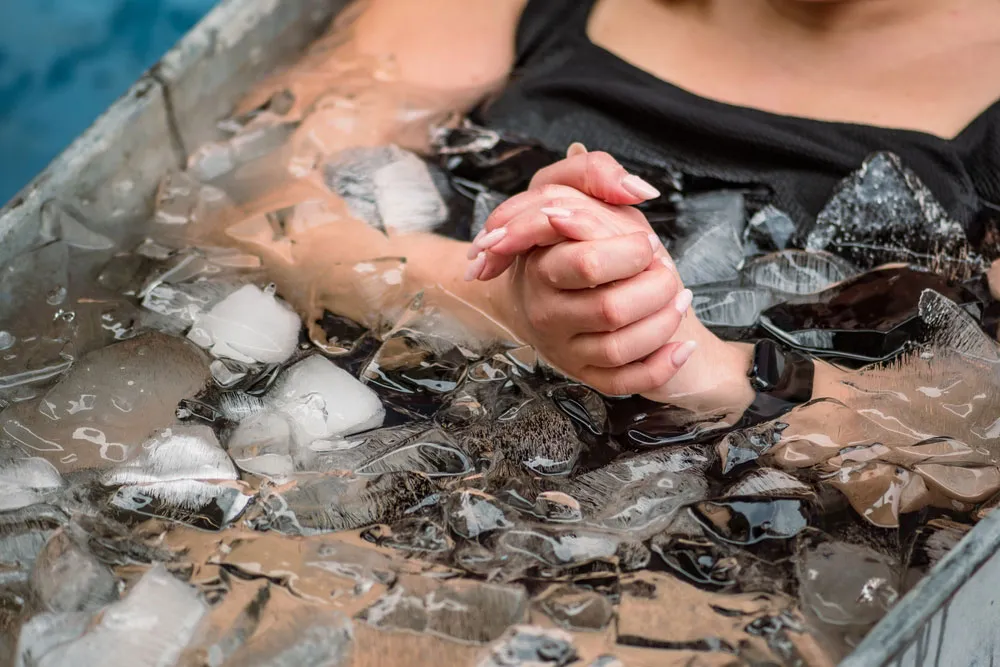
Ice baths have been making headlines for the last 20 years, and there are now a variety of reasons people are willing to hop in a freezing cold tub of water. Initially, they were just considered an athlete recovery tool, but since then, ice baths have also shifted to a mindset strategy or a more general “wellness” tool.
Ice baths have remained popular because they do help most athletes feel less sore after a workout, says Lewis. And that helps athletes feel ready to push harder during their next workout, especially if the workouts are close together. (This is why we see ice baths being used between sprints at track and field events.)
Now, an ice bath does take extra time, so it’s important to understand that it’s not a necessity, says Lewis. Instead, plan your recovery based on how hard you’re training. “If you’re in a hard training block and have a competition coming up, that’s a smart time to use ice baths after workouts with the hope of feeling better and performing great,” she says.
There is one caveat to ice bath usage: Research has shown that ice baths can blunt some muscle growth adaptations, so if you’ve just done a heavy lifting session, you may want to skip the ice bath for the day, unless you need to feel less sore for a competition or another training session later.
Cold plunges don’t need to be pricey or complicated. A bag of ice in a tub of cold water works as well as any trendy recovery spa ice bath. Aim for a tub that is 8 -15 degrees Celsius—any lower than that isn’t going to be more helpful, it will just be less comfortable. Lewis recommends staying in an ice bath for 5-10 minutes, as anything more is doing more harm than good.
Active recovery
For most young athletes, active recovery is a great strategy. Active recovery is exactly what it sounds like: Gentle movement performed outside of training that gets your muscles moving and blood flowing. Typically, this looks like walking, easy swimming, or a recovery-focused yoga class.
“For example, if you’re at a tournament and the hotel you’re staying at has a pool, having a gentle swim and moving your muscles in the water can be beneficial,” says Lewis. For young athletes who are still in school, this kind of gentle movement is important since most of the day, outside of training, is typically spent sitting at a desk.
However, Lewis is quick to point out that young athletes sometimes overdo the active recovery, turning a walk into a hard hike and a swim into fast laps. Make sure that your heart rate is low and that you’re truly just moving your body, not working. “You don’t want to get sore from your recovery walk,” she says.
Heat
Saunas and hot tubs have also been a hot topic for athletes in recent years. However, when it comes to recovery, the science is mixed. “Saunas are great for making you feel good, but they’re not really doing anything at the muscular level for recovery,” says Lewis.
If an athlete does find that a hot tub or sauna helps with their soreness and makes them feel better, it’s fine to use, but Lewis cautions young athletes to pay attention to hydration levels. “For young athletes, we do need to be more worried about the increase in body temperature from the sauna, as well as making sure that they’re rehydrated afterwards, so it’s not something I generally recommend,” she adds.
Technology and tools
Any athlete on social media is likely seeing dozens of ads for different recovery tools like percussion guns, compression boots, red light therapy, and a vast array of mobility tools like rollers and balls. Unfortunately, Lewis says that most of these tools have minimal research behind them, so it’s difficult to say which are actually worth the price tag.
However, she’s quick to add that there are two great reasons to use a recovery tool if you find one that you like. “First, if it makes you feel better, even if it’s a placebo effect, that’s still positive,” she says. “And second, with these tools, you have to sit and use them. That means you’re actually sitting and taking time to focus on your recovery. That dedicated time for recovery is a great habit.”
Nothing beats sleep when it comes to recovery
Recovery tools can be helpful, but when it comes to the body’s most important recovery modality, nothing beats sleep. “If you’re not getting enough sleep, then you need to have a look at that first,” says Lewis. “We know that sleep is when the body is able to repair and grow the muscles that you’ve worked on during practice.”
That means your greatest recovery tool may just be a nap: “I like to call naps ‘adaptation sleeps,’” says Lewis. “Often, that’s more useful than any fancier recovery tool.”
If you’re not good at taking naps, then at minimum, make time in the day to relax your brain, turn off your phone, and simply be still. “Your mind needs to recover too,” Lewis says. “So, whether that’s reading a book, doing a meditation, or having a nap, those are all beneficial for your recovery.”