
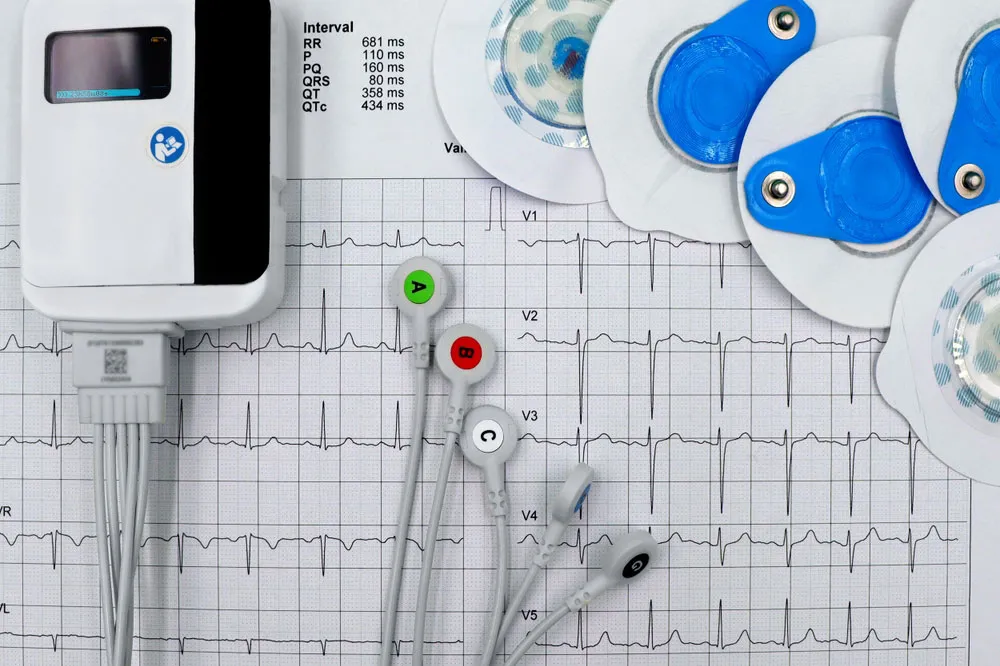
As a coach, you already have a lot of responsibilities to deal with, and making sure athletes have the appropriate medical clearance required for participation can add another layer of stress to a busy early-season schedule. Increasingly, caregivers and athletes may be asking you if young athletes should undergo an electrocardiogram (ECG or EKG) test before tryouts.
Here, Dr. Michele LaBotz, TrueSport Expert and sports medicine physician, explains why some people recommend the test, and what you as a coach need to know about the results.
Current research
Put simply, an EKG records the heart’s electrical activity, which controls the rate and rhythm of the heartbeat. “The primary purpose for doing the EKG during a pre-participation evaluation is to detect potential causes or risks of sudden cardiac death in young athletes,” explains LaBotz. “For as long as I have been in this field, the question of EKGs as part of the pre-participation examination has been an area of ongoing debate. While sudden death in any young athlete is tragic, sudden cardiac death in young athletes is rare, and we need to understand the role EKGs may, or may not, play in reducing this risk.”
LaBotz explains that the way the numbers are reported can be confusing. Researchers talk about the risk of sudden cardiac death in terms of “athlete-years,” not “athletes.” One athlete participating in one year of athletic participation equals one athlete-year. Some statistics also include athletes who experienced sudden cardiac arrest but were successfully resuscitated and survived.
“The risk of sudden cardiac death in athletes under 18 is about one in 100,000 athlete-years, but if we include athletes who survive an episode of sudden cardiac arrest, the risk is about one in 65,000 athlete-years,” says LaBotz. “Risk is significantly higher for males compared to females, and it goes up as athletes get older, which is why more collegiate programs are requiring EKG tests for athletes. Sport matters too. Football and basketball are the two sports with the highest rates of sudden cardiac death, and Black collegiate basketball players appear to be an athlete population at uniquely elevated risk.”
One of the problems with EKG testing is the potential for “false positives,” where the EKG suggests an issue, but the heart is actually healthy. “There are a lot of changes that happen in the hearts of athletes,” she says. “Their heart muscles tend to be bigger. There can be changes in the rhythm. Some of those normal athletic changes overlap with changes often associated with cardiac disease, and that leads to false positive tests.”
False positives can create panic and potentially impact an athlete’s season, but they can also strain the medical system and family resources because further tests are needed before an otherwise healthy athlete can be cleared to play. An athlete with an abnormal EKG will typically need an echocardiogram or a cardiac MRI, both of which involve specialized equipment and a cardiologist who can interpret the results and clear an athlete for play. These tests can be expensive for many families, and many areas lack ready access to cardiologists who can read the results and counsel athletes and their families.
Current requirements
In the United States, EKGs are not routinely recommended for athletes younger than college age. Instead, the current approach is individualized. “If there are any red flags in the family history, or if there are concerning symptoms or findings during a physical exam, then an EKG might be recommended. Many colleges are routinely performing EKGs during their pre-participation exams, but these decisions are made at the institutional level.”
LaBotz also notes that for athletes who haven’t reached puberty yet, an EKG typically won’t show the warning signs for the most common cause of sudden cardiac death in that age group, anomalous coronary arteries, which can only be detected with a cardiac MRI or an echocardiogram.
As technology continues to develop, current recommendations could shift to recommend EKG testing for more athletes. Researchers are working to refine EKG criteria for athletes to reduce false positives. LaBotz also notes that the technology is rapidly changing, and artificial intelligence (AI) detection tools may make reading EKGs more accurate and more efficient, allowing more youth athletes to be tested and cleared.
Should you recommend that caregivers get athletes tested?
In most cases, the decision about whether to get an EKG is best left to the athlete’s health care provider. Coaches can help by making sure families complete thorough pre-participation materials, including the personal and family history questions in the American Heart Association’s 14-element screening checklist. These questions can help health care providers decide whether an EKG is needed.
“There is convincing evidence that EKGs do a good job of detecting conditions that are associated with sudden cardiac death,” says LaBotz. “But there’s not good data showing that implementing EKG screening programs actually reduces the risk of sudden cardiac death in young athletes.”
Whether or not an athlete has had an EKG, LaBotz says coaches should watch for two red flags that may indicate a potential cardiac issue:
- Passing out during exercise, regardless of the temperature outside or the athlete’s effort level, is a serious concern and should be evaluated by a doctor before further participation. Even if the athlete regains consciousness quickly, this episode may signal an underlying serious condition and needs medical evaluation. If an athlete does not regain consciousness immediately, be prepared to implement your emergency action plan, including dialing 911 and locating the nearest automated external defibrillator (AED).
- Chest pain during activity is another reason for athletes to immediately stop play and seek medical attention.
What happens after a concerning test result? “
It depends on the issue detected,” LaBotz says. “Once a potential ‘red flag’ is identified on the EKG, the athlete and their caregiver should discuss any possible sport or activity restrictions with their health care provider. Some conditions allow athletes to keep playing, while others may require sitting out until a definitive diagnosis is made.”
Because being inactive comes with its own physical, mental, and emotional risks, doctors will often help athletes keep training to some degree while waiting for further results. Coaches can support that by helping to assure that the athlete is following any restrictions the doctor sets and by finding safe ways to keep the athlete connected to the team. “When you pull kids out of sport, and away from their teammates, oftentimes they don’t come back,” LaBotz says. “And that isn’t healthy either.”