 Content Warning: This article contains mentions of eating disorders.
When it comes to proper hydration, calculating sweat rate is one of the easiest ways to ensure that your young athlete is drinking enough to stay hydrated during sport. And understanding sweat rate—how fast an athlete’s body is sweating out fluids—is important for both performance and safety.
“People’s hydration needs are really individual. If an athlete is even two percent dehydrated, that can decrease their performance by around 20 percent,” explains TrueSport Expert Kristen Ziesmer, a registered dietitian and board-certified specialist in sports dietetics. “Calculating your sweat rate is one of the best ways to tailor your hydration plan. It shows you how much fluid you’re actually using, and how much you need to drink—and it’s one of the cheapest and simplest tests to do.”
Here, Ziesmer explains how to help your athlete calculate sweat rate, and what you need to know to optimize their hydration plan.
Sweat rate is a moving target
 The ounces of fluid an athlete loses per hour will change with different conditions. You may need to calculate it a few different times so your athlete knows how much to drink in different temperatures and weather situations. Of course, the hotter it gets, the more your athlete will sweat.
But is it a dry heat? Humidity is an important consideration in addition to general temperature. “The way that your body cools itself is by sweating and having that sweat evaporate,” explains Ziesmer. “But when you are in a humid environment, sweat never has the chance to evaporate. So your body’s just getting more hot, more sweaty, and more dehydrated.”
How to calculate sweat rate
Before calculating sweat rate, have your athlete step on the scale before and after each practice session, and during practice, measure the amount of fluid they drink. Ziesmer suggests repeating this calculation several times to get an average, since there is plenty of room for error—your athlete might forget that cup of sports drink that she chugged mid-practice. (Note: Make sure your athlete empties their bladder before getting on the scale to weigh in.)
Calculation:
- Weight before exercise – Weight after exercise (in pounds)
- Weight lost in pounds (A) x 16 ounces
- Amount of fluids consumed during activity (in ounces)
- Total fluids used during activity (B + C)
- Duration of activity, in hours
- Sweat Rate per hour = D / E
Example:
- Weight before exercise (140 pounds) – Weight after exercise (138 pounds) = 2 pounds
- Weight lost (in pounds) x 16 ounces = 32 ounces
- Amount of fluids consumed during activity = 16 ounces
- Total fluids used during activity (32 + 16) = 48 ounces
- Duration of activity, in hours = 2 hours
- Sweat Rate = 48 / 2 = 24 ounces per hour
Practice good judgement with scale usage
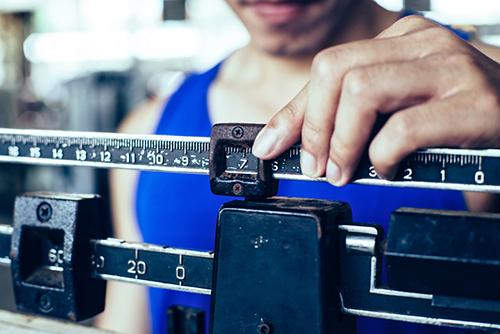 Some athletes shouldn’t be looking at the scale, even if it is for the purpose of determining sweat rate. If your athlete has a history of disordered eating, eating disorders, body dysmorphia, or any other kind of issue around his or her weight, Ziesmer recommends having your athlete stand on the scale facing away from the number while you record the information.
Keep the scale usage the same
When dealing with weights that are calculated down to the ounce, things like if your athlete is wearing his shoes on the scale or taking them off will matter. And for sweaty athletes in sports like cross-country running, another potential scale problem on hot days is that their clothes may be soaked with sweat after practice, so doing a pre- and post-workout weight check while they’re wearing consistent attire is going to lead to a more stable calculation. An ounce or two doesn’t make a major difference, but heavy shoes and extra gear can easily add a pound or two to the scale weight and throw off the calculations.
Use that sweat rate to determine hydration needs
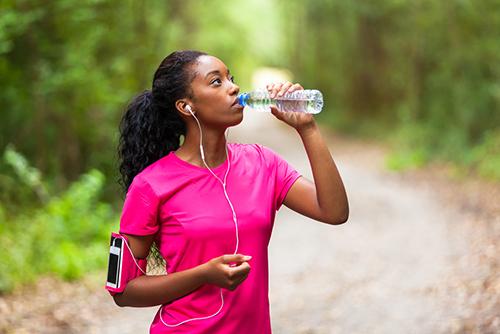 The sweat rate—ounces of fluid an athlete loses per hour—is roughly what should be replaced per hour. In the above example, the athlete would need to drink around 24 ounces of water each hour in order to stay optimally hydrated. Ziesmer breaks it down even further for athletes by considering the number of times an athlete will drink per hour during practice, which will vary a lot depending on the type of sport and availability of drinks. If the athlete in the example above was playing soccer, for instance, she can only drink when she’s over on the sidelines. If that happens four times each hour, and she needs to drink 24 ounces per hour, that means she’ll need to drink six ounces of water or sports drink every time she’s on the sideline.
Electrolytes are part of the equation as well
If your athlete tends to cramp during activity, low electrolytes might be to blame, and sodium in particular is a common culprit. “Cramping occurs due to one of four things: dehydration, low sodium, low carbohydrate, or as a result of being untrained,” Ziesmer says. Focus on replenishing sodium with around 1 gram of sodium per hour of intense, prolonged activity. This can be done with a sports drink, electrolyte tab, or even simply a pinch of sea salt in your athlete’s water bottle.
Have a recovery plan
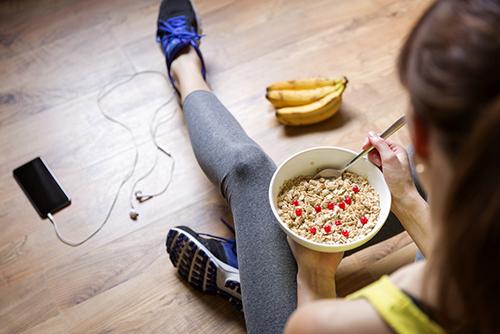 Post-workout, for every pound lost, athletes should drink 24 ounces of fluid for recovery. (So, in the above example, an athlete should drink 48 ounces for recovery.) Athletes also need to eat carbohydrates for recovery: Chugging water alone isn’t going to be enough to help them fully recover, Ziesmer notes. Her rule of thumb for how many grams of carbohydrate to eat post-workout is your athlete’s weight in pounds multiplied by .7. That recovery snack should be eaten within 30 minutes of finishing the activity, and fluid recovery plus a full meal (including a protein source) should happen within two hours of finishing.
Watch for signs of dehydration
Even if you think you understand sweat rate and have calculated it correctly, tell your athlete to pay attention to signs of dehydration. Ziesmer explains that these signs include fatigue, headaches, nausea, chills, and sweating. Dehydration is a medical emergency, and the earlier it can be caught, the better your athlete’s ability to recover will be.
______________________
Takeaway
Hydration is critical to both safety and performance. To truly understand your athlete’s hydration needs, it can be helpful to calculate their sweat rate and optimize their hydration plan using that information.