
 It can be difficult to know what to do—and what not to do—to best help athletes with issues around body image. This is especially true when even seemingly innocuous comments can lead to issues with negative body image.
Here, TrueSport Expert and licensed clinical psychologist Dr. Melissa Streno is sharing what you shouldn’t do when communicating with athletes about body image.
DON’T Refer to Size/Weight as Performance Indicators
Saying someone “looks like” a certain type of athlete or praising someone for their recent weight loss may seem harmless, or even seem positive. But remarking on an athlete’s body in terms of shape or weight is never appropriate for a coach. First and foremost, not every athlete is comfortable having their body assessed in general, so mentioning a weight change may feel like harassment for some. Second, though you may not realize it, you could be encouraging dangerous behaviors like disordered eating when you praise someone’s weight loss, says Streno.
And lastly, even if the athlete in question isn’t affected by your comment, another athlete who overheard it may end up in a negative thought spiral or develop disordered behaviors in an attempt to match their teammate’s progress. “Instead, let athletes know that strong, resilient bodies come in all shapes and sizes,” Streno says. “Be aware that certain body ideals have been around for a long time but aren’t always accurate. For instance, the stereotypical best cross country runner is tall and lean, but we have data to disprove that.”
DON’T Use Triggering Terms
 Calling one runner ‘tiny’ or ‘skinny’ may not seem like a big deal, but words have a lot of power, says Streno. You may not be aware of how often you’re using terms like that, so pay close attention to your language for a few practices. “I try to use terms like under or over-fueled rather than under or overweight,” says Streno. Even positive terms like ‘healthy’ or ’strong’ can be triggering when used to describe how someone looks, especially if that person is already struggling with body image or disordered eating.
Even in sports that have weight classes, relabeling those classes might be a good step to take, especially if you notice that your team does tend to have issues with trying to make it into certain classes. “Terms like heavyweight or ultra heavyweight can be triggering, even if that’s simply what the weight class is called,” says Streno. “Ideally, the sport’s governing bodies would create more natural terms for the classes, but you can do so within your team.” Think about using A, B, C, and D rather than feather, light, heavy, and ultra-heavy weight.
DON’T Label Foods as Good or Bad
“First and foremost, it’s always a good idea to encourage athletes to work with a registered dietitian, or have one come in to speak to the team about fueling habits,” says Streno. “But in general, when it comes to food, avoid attaching ‘good’ or ‘bad’ labels to any one food. All food is good in moderation and in context. Encourage athletes to eat a variety of food.” Move away from labeling any food as being clean, healthy, or unhealthy. Young athletes don’t understand the context or nuance around nutrition (nor do many adults). A bowl of white pasta may not seem like a ‘healthy’ or ‘good’ choice, but eaten the night before a competition, it’s more beneficial than a bowl of steamed broccoli! Putting food into positive/negative categories can encourage orthorexic behavior, which is when an athlete becomes obsessive and restrictive about only eating “healthy” foods. “Encourage athletes to choose food that tastes good, provides satisfaction, and makes them feel really strong in terms of energy for performance,” Streno adds. “Highlight the positives in terms of what food is intended to be used for.”
DON’T Encourage Any Team Weight Tracking or Weigh Ins
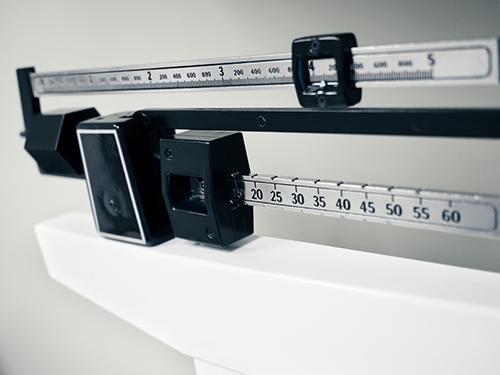 With the exception of weigh ins for sports that have weight classes, Streno believes that coaches should not be weighing athletes under any circumstances, and certainly not in public. Team weigh-ins have thankfully become less common over the years, but some coaches persist in the practice, which can lead to unhealthy, dangerous behaviors for young athletes. If you do need to weigh an athlete, Streno suggests doing so in private, and without the athlete seeing the weight on the scale. The goal is to move away from weight being tied to any performance indicators or metrics, and for many young athletes, that means the less often they see the number on the scale, the better.
DON’T Use Weight as a Measure of Health, Fitness, or Success
Often, coaches mistakenly substitute weight/leanness as a metric for health, fitness, or potential in sport. But weight is a poor indicator of all those things, Streno says. “Instead, your athletes should be reporting on how they feel,” she says. “Do they feel strong? Do they feel like they have good energy? Do they feel like they’re able to make it through a training session and not have hunger cues? Are they sleeping?” Skip the scale and look at other measurable objective and subjective variables. Unless you’re a medical professional, you’re not equipped to give advice on whether an athlete should gain or lose weight. If you’re concerned about an athlete’s health for any reason, consult a professional.
DON’T Make Athletes Feel Bad About Having a Negative Body Image
 It might come as a surprise, but often, coaches accidentally push athletes further into a negative spiral and encourage secretive behavior by “banning” negative body image. You might think you’re doing athletes a service by telling them to only focus on the positive, but it’s unrealistic to expect athletes to always maintain a positive body image. Making athletes feel ashamed for their negative thoughts only makes matters worse, says Streno. Instead, be understanding and empathetic, and help push athletes towards body positivity or neutrality—but don’t enforce an environment of toxic positivity.
______________________
Takeaway
As a coach, the more you can focus on an athlete’s performance, not body type or weight, the better. Avoid weigh-ins, discussions of food as being good or bad, body comparisons amongst teammates, and using weight as a substitute for a measure of health or performance. And while the ideal is to have athletes embrace a positive body image, remember that it’s perfectly natural for them to occasionally have negative thoughts.