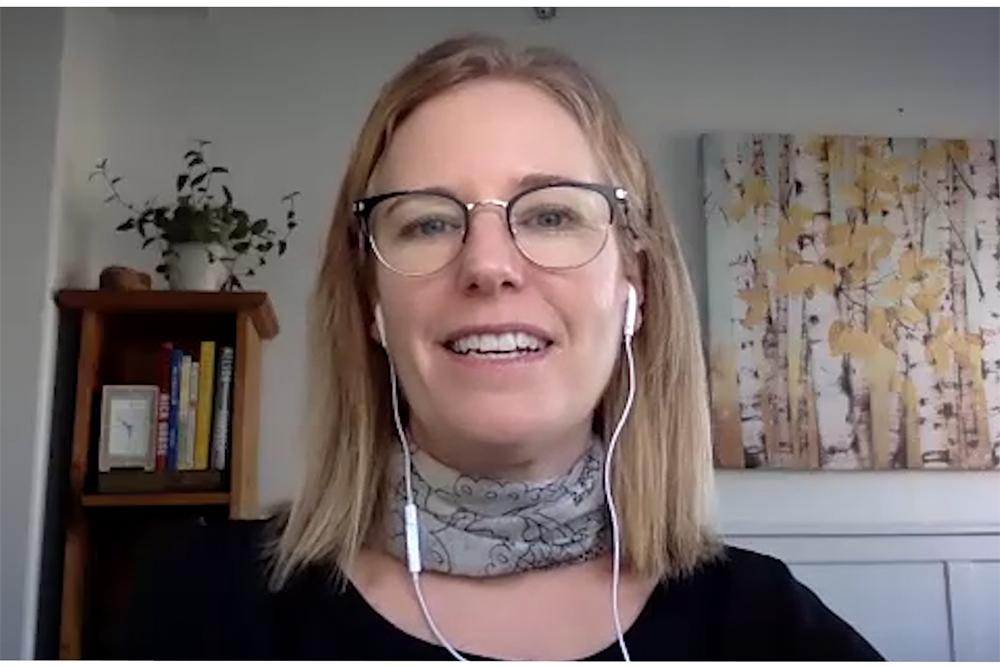
Learn more about Nadia Kyba.
Video Transcript
Nadia Kyba: Belonging is a real human need and it’s a very important part of being on a team, and it’s an important part of any stage of life, even in adulthood. And that need to belong can supersede one’s ability to offer empathy when we see something that’s not right.
Some examples of what empathy and intervention can cost a young athlete might be their own exclusion on a team. For some athletes, they worry that if they speak up, they will enter into conflict and maybe they don’t have the tools or the skills to manage that conflict, and the conflict might cost them something. It may be that they, themselves, are worried about losing their sense of belonging on a team. If it’s an athlete worried about speaking to a coach, they may be worried about their standing with that coach and on the team, even if they know that an athlete may not be treated in a way that they know is right. So, for example, sometimes we can think about an athlete who can empathize with a teammate going through something like performance anxiety, even if you haven’t experienced performance anxiety yourself, you can understand how that might feel and the feelings around that and have empathy for that. But if an athlete is underperforming in competition and are being ridiculed by their teammates or reprimanded by their coach, the cost of offering empathy in that situation might be that the negative attention is turned on the athlete by the teammates or by the coach.
The cost of empathy should not be excused when we’re thinking about bullying-type behaviors. At the same time, it should be acknowledged. So, it’s really tough for kids and for adults to intervene, and I think that we see this all the time as adults, when people are faced with situations, maybe they hear racist comments and they don’t speak up or maybe they hear things that kind of go against their core values and they don’t say anything, and that’s because there is that cost of empathy. And that cost of empathy is worrying about losing belonging in a certain situation. It may be that they’re worried about the backlash, and ultimately, it’s a fear of conflict and of being able to have that confidence that you’re able to manage and work through a conflict without losing something in the situation.
Coaches and parents can support athletes to act on behalf of others by creating a safe space. The first thing that they can do is really acknowledge that it is difficult to speak out, and I think that oftentimes, as parents and as coaches, we have this expectation on young people that they just need to do the right thing, and we oversimplify what they are going through on the team and we oversimplify the cost of empathy. It’s also really important to talk to the young person about possible ramifications if they do speak out. So, just work through possible scenarios that could happen, give them the confidence to be able to address it by, perhaps, practicing some scripts, brainstorming what the other person might say, and just giving them that additional support and recognition that it’s tough.
Another thing that I would recommend is that sometimes it’s really hard speaking up in the moment, sometimes we’re a little bit blindsided when these things happen, so when we see another person being treated poorly, it takes a little while for our minds to process what’s happening and to formulate the words or the best action to take. Giving young people permission to not necessarily act in the moment and to step away and reflect on what’s happened and to consult with an adult, is just fine and it’s very helpful for them. I think by not shaming them or blaming them for not having intervened in the moment also gives them that additional support.
Coaches also need to set clear expectations about communication on their team, so that athletes understand what is expected in terms of their behavior, but also so that athletes understand that conflict is going to happen on their team, and when it does happen, perhaps we don’t always behave in an optimal way, but the important thing is to be able to talk about it afterwards and to try and work to resolve the conflict that’s come up.
And then finally, something that I have seen different sports associations implement are mentorship programs with older athletes. And what that has done, is offer younger athletes encouragement and advice about how to address different situations that they see. Sometimes adults are just a little bit removed and our advice isn’t always welcome by younger athletes. But if there are mentorship programs where you have an athlete who’s a couple of years older who a younger athlete can rely on for support in these difficult social situations, they then get that additional help in managing conflicts that can come up.
On any team it’s important for coaches to normalize conflict, to train a team to expect conflict to come up, and to welcome conflict when it does happen, because conflict makes teams stronger, it builds trust. When coaches are able to train their team to have direct, open communication and establish systems when problems come up on how to resolve those problems, they are better able to address bullying-type behaviors and they’re better able to support athletes when they want to come forward when they witness these types of behaviors.