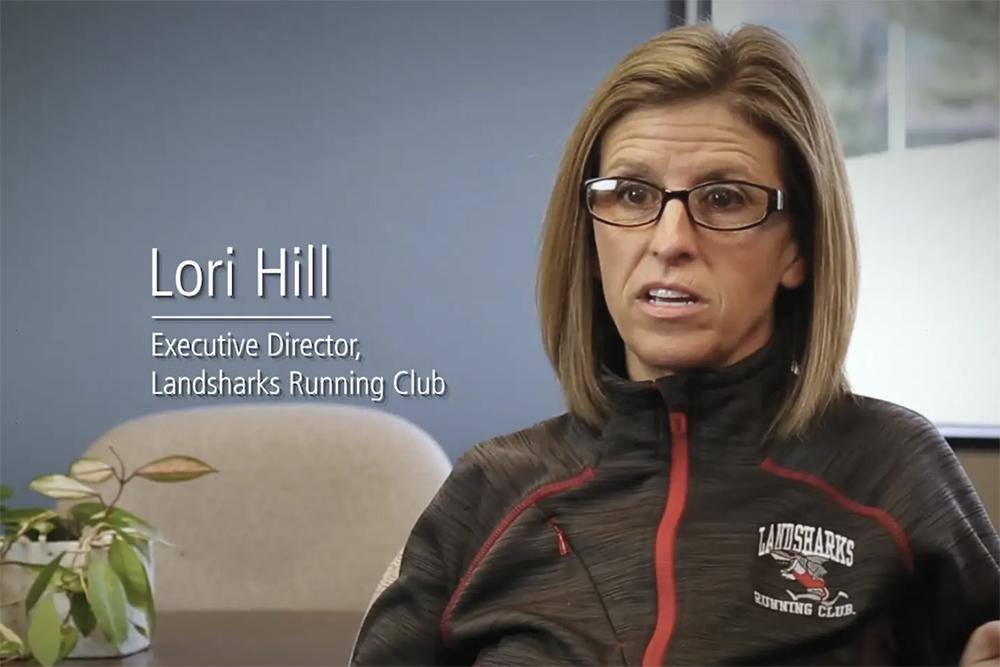
TrueSport expert, Lori Hill, of the Landsharks Running Club, explores ways that coaches and parents can communicate goals and expectations to improve their young athletes’ physical and mental health.
Learn more about Lori Hill.
As a coach, unrealistic expectations are, I think probably one of the largest topics you’re going to have right now. The reality of the situation is, is you have mom and dad and you have coach. And you have to, as a coach, respect those family dynamics, the school, and that family culture. Kids are overbooked. They have a tendency to get very one sport oriented. And we as a coach have to remember that we have these kids again for an hour and a half a day, but it is only an hour and a half a day. And perhaps conversations with the parents outside of listening ears with children is a great way to handle that. I think a key point in keeping unrealistic expectations down for families, and coaches, and parents is vocabulary. Instead of necessarily saying, “Oh, so-and-so won this race.” Or introducing something along those lines, we need to be very careful in the vocabulary that we choose.
The other thing I think that’s very helpful is as a coach, to immediately, in your coaches or parents meeting, to discuss with parents what your definition of success is, and kind of understand what their definition of success is. You have a very large tendency to see that 98% are going to have realistic expectations. And that 2% does start to think about what is going through their mind. They either realize that this might not be the place for them. This might not be the program for them, or they will come and approach you and say, “Hey, listen, my kid wants to be like this.” And that opens up that opportunity to have a conversation with that family. It’s interesting because when I was younger, I never referred to swimming lessons as swimming lessons. I got to go swim.
And I never referred to track as track practice. It was, oh, I get to go run track. Now everything has these different connotations that it’s not play anymore. It’s a task. How I handle it, is I coach these kids during my season. And when that season is over, I try to find a recommendation for something completely different. So if we’re going to have six to eight weeks of land sharks running. I’m going to give them an agenda of swimming afterwards. Hey, I know this swim club over here, we’re working a different body part. We’re not on our legs the whole time. So if you have a basketball player, or you have something along those lines, hey, go try lacrosse, this is a great season. The kids are still moving. They’re still active, they’re not necessarily completely overworking their bodies, their minds, their emotions in the same sport, continuously. Bottom line is they’re kids. And if they are not having fun, nobody’s done their job.