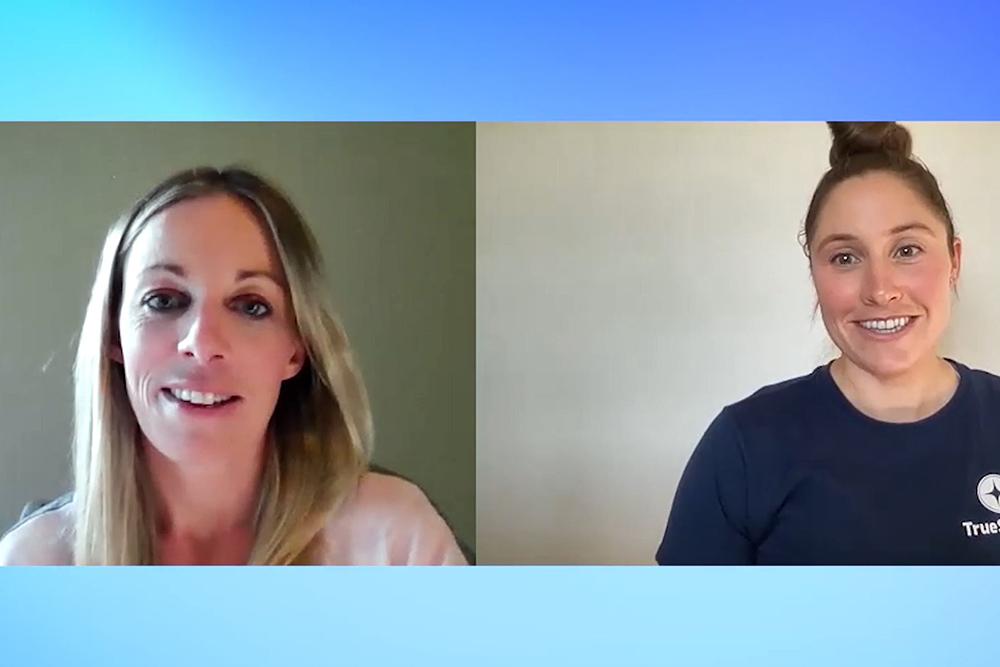
Kara Winger: Hello and welcome to the TrueSport Expert Series 2022. This episode is, “Fueling the Female Body.” I’m Kara Winger. I throw the javelin, I’m a 4-time Olympian, and that is all I will be, I’ll compete for one more season this year in 2022. Former American record holder and one of my favorite things about my career is that I was voted closing ceremony flag bearer in Tokyo 2020. With me today is Dr. Laura Lewis, Director of Science for the U.S. Anti-Doping Agency. Hi Laura, thanks for being here.
Dr. Laura Lewis: Hi Kara, how are you going?
Kara: I’m great. Excited to talk to you about fueling the female body. There are many differences between men and women, and this maybe isn’t my personal experience, is that, at altitude, men burn more carbohydrates and women burn more fat. But I’ve lived in Colorado Springs at almost 7000 feet of elevation for nine years, and I might be carrying more fat than I was when I got here, so individual differences are also important. But can you speak to that a little bit? What is one of your most interesting facts about men versus women in the athletic realm?
Laura: There’s big physiological differences between men and women, and this all comes down to the different sex hormones that men and women have. And they affect four key areas, particularly when we’re talking about sport. So first, there’s body composition. So, what our bodies look like. Men generally have more muscle mass and less fat than women. We can also talk about substrate utilization, so that’s the different fuels that we burn when we’re doing different types of exercise. Thermoregulation, so how we respond to heat and cold, and how we regulate our body temperatures. And then also fatigue resistance, so how the muscles respond to different stimuli, and how hard and how long they can work before they get tired. I guess the problem is, that most of the research that has been done has really just been based on males. It’s actually a four to one ratio, the research projects that have involved males only versus those that women in them. So, we’re trying to draw all these conclusions based on male-only research when we know that the physiology of men and women is so different, it’s really dangerous and can get ourselves in a bit of trouble if we think that women are going to respond exactly as men, in terms of training and also their different nutritional strategies. If we think about the course of our life as well, things are pretty similar to men until we get to puberty, but then once we hit puberty and then we go through menstruation, potential pregnancy, and then also through the menopause, our needs as females are just going to change and evolve. But then it’s taking it to that next level and really thinking about the individual. What are the demands of your sport? What are your performance goals? At what stage of your life are you at? And tailoring those strategies to fit that.
Kara: I love that you said that about individual needs, too, because it’s so true that we don’t have the research, the data, the support for some of the things that we might try to apply from the men’s side of sport. But what are some optimization strategies that work better for the female body?
Laura: Energy availability, if we don’t have enough of that, then we can have quite dire consequences for our bone health, our reproductive health, immune function, not to mention performance. I’d also say for young athletes, this is probably the most important thing, it’s so important to look after your bones early in your life. In those early years is when we are really laying down the foundations of our bones and making really strong healthy bones for later in our life. If you pay the price early, you can’t really catch up, unfortunately. There’s no shop we can go and buy good bones from. So, taking really good care of your bones by meeting your energy requirements and also calcium intake and vitamin D. I guess I’m the biggest dairy fan that there is. I probably should have been a dairy farmer if I wasn’t a scientist. But milk is obviously a fantastic source of calcium and you can do so much with milk, milk shakes, milky coffees, oats cooked with milk, cereals with your milk. And don’t be scared of the whole fat milk. That’s actually a really good source of fat and an excellent source of calcium.
Kara: Are there things women should be avoiding when it comes to trendy fueling practices?
Laura: Definitely think about the whole picture and be really wary if you’ve got some type of fad or trend that’s really focused on removing a whole food group. There are a number of different food groups for a reason, because they do serve different purposes. And if you remove a whole food group, that’s obviously going to have a consequence. So, while the promoters of that particular diet or strategy might tell you the good consequence, think about how there’s always going to be a bad consequence for that, as well. And if you’re feeling overwhelmed, go and see a dietitian or a sports nutritionist, because they can really give you that overall picture and their job is to make this not overwhelming and make it simple. They can tweak just a few little things that give you the power to make big changes and really help your performance from food.
Kara: I love how you said that, “Give you the power,” because that’s absolutely true. You should be making decisions in your best interest and your performance’s best interest as an athlete.
Laura: And food is supposed to be fun, too. So, if you can meet these needs with a food-first approach, that’s so much better than having some fake thing that’s supposed to represent something else, but you don’t get any enjoyment from eating.
Kara: Well, I’ve learned a lot and have been able to reflect on some of the things in my career that I maybe didn’t fully understand before. I really appreciate your insight today, Dr. Laura Lewis. And this has been Expert Series 2022 with TrueSport, “Fueling the Female Body.”