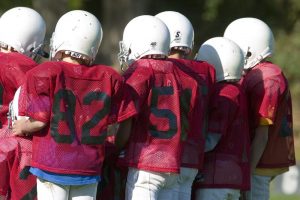
Whether you win or you lose, it’s about what did they learn from that competition. So, when I work with athletes, we do a lot of journaling, and one of the things that is a repetition journal exercises after a competition, regardless of what the scoreboard says, “What did we learn? What needs to change? What was exciting and fun that we want to keep on doing?” If we always have those kinds of conversations, then the scoreboard of win-loss goes in the background.
I coached high school athletics for 15 years. I still have athletes that come to town and say, “Let’s go see coach.” When we talk about when they played for me volleyball or basketball, they don’t remember, “What was the score when we played Doherty High School? What was the score?” But they’ll remember, “Remember that time we had all four of our starters were on crutches,” and they will remember the experience. They will remember the emotion at that event. When they talk about team camp we went to, “Remember when this happened.”
So you’ve got to make sure that when you talk about win-losses, you talk about what the experience was like. What was the process? What did we experience in the moment? What do we want to take forward from that? So I can see a number of different ways how coaches and parents can help their athletes learn how to handle failure. One is, make sure your conversations are around how they felt during the competition, that they had more happy feelings, satisfied feelings, than disappointments. That’s one.
Two, you want to make sure you the athlete talk about where they had their effort, where their focus was. Could they have tried harder? Could they have paced it differently? Were they at times trying too hard? Third, if this athlete was to be giving themselves advice to their future self on effort, what would you have the athletes say to their future self about if you played this exact game again, this match again, had the same amount of playing time, what would you do different, more or less of, in terms of your effort?
Because here’s the thing. When you start getting a child, an athlete, to understand efforts in their control, you will, at times, will see them or their team almost celebrate. Maybe they lost on the scoreboard, but because of the effort of the athletes, they played phenomenal. Yet the team that was the better skilled team, even though they won on the scoreboard, they walk off the competition field with their heads down.
So if you can structure competition around effort, typically what happens is those kind of athletes or athletic teams don’t make the same mistakes twice because you can always change effort. You can’t always change a scoreboard, but you always change effort. So when you have those conversations, kids get excited about that.