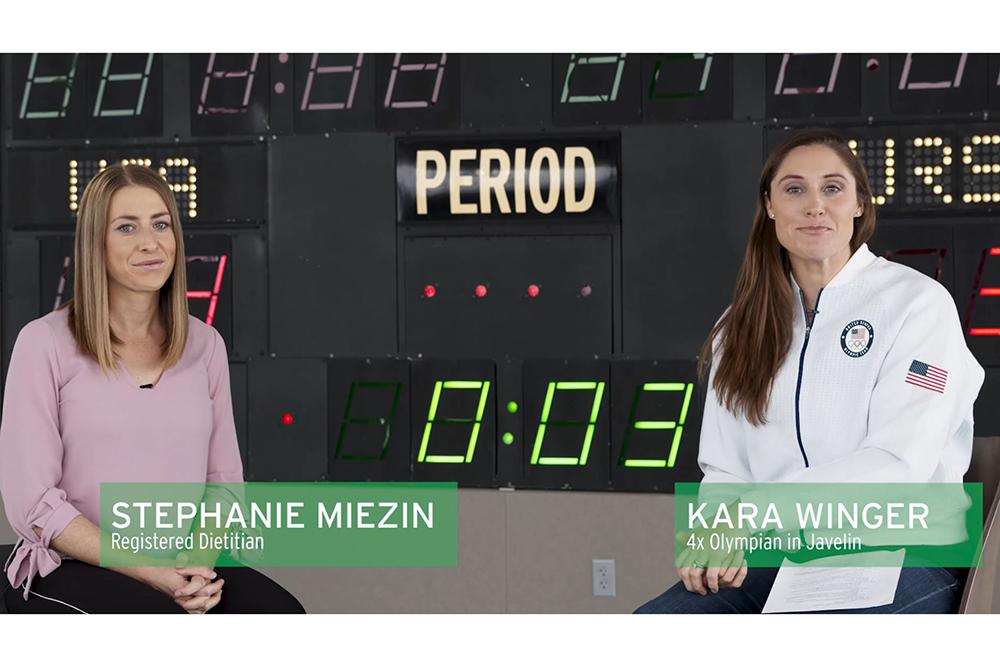
Registered dietitian, Stephanie Miezin, joins the TrueSport Expert Series to share practical tips for how we can fuel our young athletes with foods that are both healthy and delicious.
Learn more about Stephanie Miezen.
Registered dietitian, Stephanie Miezin, joins the TrueSport Expert Series to share practical tips for how we can fuel our young athletes with foods that are both healthy and delicious.
Learn more about Stephanie Miezen.
Kara Winger: Hey, I’m Kara Winger, your host for the TrueSport Expert Series 2022. We are here to talk to Stephanie Miezin about how to make nutritious food taste delicious. Thanks for being here, Stephanie. –
Stephanie Miezin: Yay. I’m so glad to be here and to be able to talk with you about this topic. I love sharing ideas on this because I think it’s so important to help people eat more healthfully, right? It has to taste good. And so I think it’s a really fun one.
Kara Winger: Well, and my relationship with food has come so far. Being a woman athlete in a sport that is more power based. So maybe my body type is a little bit bigger and that is completely OK. Every body type can be successful in every sport, but I really did kind of limit myself for a while and that resulted in one of my first major injuries. And then I have come a long way with my relationship with food ever since. And a big part of that is making food taste delicious. It can be great for you and fuel your body really well, but it’s also important for it to taste good so it keeps you coming back for more. So, what are some ways that people can do that, make healthful, nutritious food taste great?
Stephanie Miezin: So many ways. So I think number one is realizing that, like every step in the process of making food is an opportunity to add flavor. Right? It’s all about flavor. And so, that can look like so many things. It’s like starting with ingredients that are super flavorful, like getting a tomato that’s ripe if you can, versus one that’s still pink and not going to have that sweetness that you’re looking for. So, really choosing ingredients the best that you can in your environment. And then can we season them to get ready for cooking? So beyond salt and pepper, right? Trying to explore a little bit with some spices. I mean, we just pick up one at the store. Next time you’re there, you’re like, I don’t know how to use this one. I’m going to figure out cumin this week, right? Or some of the spice blends can make it easy, too. And then focusing on technique, I think cooking technique is really key because if you understand some of the core cooking techniques, you can cook anything without a recipe, right? Like if you’re focusing on how do I really sear and develop that flavor and that caramelization, then maybe you don’t have to add a bunch of salt later to make up for that flavor that you’re missing. And so I think just like understanding technique is so huge and that’s that food literacy, just understanding food can help you make decisions and really build that flavor and then feel like I know how to do this. And it’s exciting because it tastes so good.
Kara Winger: Well, and it’s such a cool parallel to sport, right? As an athlete, you develop skills, you’re learning as you go and as you become a better athlete, an older person like in your sport. Same thing with each step of the food process, like you said, like you’re maybe marinating your steak and then you’re slicing it super thin with your knife skills and then you’re searing it in the pan with your olive oil and your other spices. But until you really take that leap and immerse yourself in the whole process, you maybe don’t get the satisfaction of each step building on itself.
Stephanie Miezin: Yeah. And I think sometimes too, especially with social media, there’s a lot of pressure that your food has to look a certain way because you want to take a picture with your friends and whatever. Sometimes. But we don’t have to go that far. It’s like the food is for us and for us to enjoy and to nourish ourselves. And so it doesn’t have to be perfect. It’s just starting somewhere and being in the kitchen can be really like overwhelming if you’re not used to that environment. And so it’s OK to like not have great knife skills and say, OK, I’m going to work on this and OK, I’m going to work on this one technique of roasting or whatever and just build on those skills.
Kara Winger: Yeah, very cool. My husband is absolutely the chef in our family. I’ve come really far, but my specialty, like you said, it doesn’t have to look great as long as it tastes great and you know that it’s fueling your body well. My specialty is the bowl of calories. So many different forms, get the protein in there, get the carbs in there, probably there’s going to be cheese if it’s a meal that I’m making, and I will enjoy the heck out of that bowl.
Stephanie Miezin: Yeah, and it’s going to taste good, right? Or else we’re not eating it.
Kara Winger: Yes, 100%. And for me, that’s a time saver, too. Like, I don’t have a bowl for salad and a plate for my protein and something else to take up a lot of dishes. I can consolidate everything into that bowl for me. So what are some other time saving tips also? You want it to taste great, fuel you well, but you don’t have that much time. What do you do?
Stephanie Miezin: Yeah, there’s so many things you can do. And I think the convenience of a lot of semi-prepped or pre-prepped foods at the store make this so much easier than it used to be, like even just getting a package of pre-cooked vegetables. For some people, like that’s what they need to just be able to get vegetables in that meal because they don’t want to cut up peppers or know how to cut up peppers, maybe let’s say, right?
Kara Winger: Or they’ve had every intention to cut up those peppers, and then they rot in the vegetable drawer every single time. So, the pre-cut, phenomenal. Personal experience.
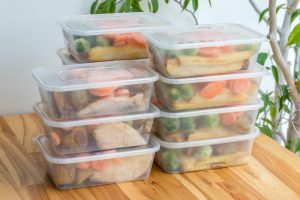
Stephanie Miezin: Yes. I also really like the idea of some sort of prepping ahead. But I don’t think you have to necessarily do the whole meal prepping thing. There’s a style of like food prepping that I always I like talking about because I come from restaurants originally like working as a chef. And so this is restaurant-style meal prep, as I call it.
Kara Winger: And talk about timesaving, you got to be quick.
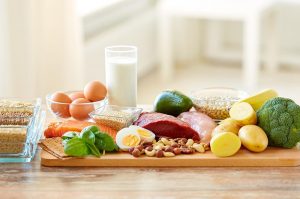
Stephanie Miezin: Exactly. And this is how restaurants get food on your plate so fast. And so you take the major components of your meal like your carbohydrate food, your vegetables, your proteins, maybe your sauce or something. And especially for those the carbs, the proteins, and the veggies, if you kind of cook them off and don’t add a ton of specific seasoning, just do like general simple seasoning, then you can use that like grilled chicken, let’s say. And you can cut it up next time it’s time to make a meal and saute it with peppers and onions and cumin, and then make it into fajitas. Or you can add soy sauce and rice vinegar and sesame oil and make it into like an Asian-style dish. And so by simply seasoning your core components of the meal, you can have both convenience and variety for the next couple of days because you just need to kind of assemble and add the final flavors when it comes to making it. So I think that’s a great strategy for people who want that convenience but don’t want to have lasagna for eight days.
Kara Winger: Right. And the timesaver part of meal prepping can sometimes feel so daunting on that Sunday when you have hours of meal prep ahead of you. I don’t love that personally. So that tip is fantastic. Do a little bit of it, know that you have flexibility.
Stephanie Miezin: Yeah. And I also recommend sometimes to do like your grocery shopping for the week and your meal prep on separate days.
Kara Winger: Yes. Yes.
Stephanie Miezin: Because after you go to the grocery store, yes, I’m just like, I’m so tired. I have to cook for four hours now. So I think splitting it up just kind of helps to share that burden a little bit. And then you don’t have to spend so much time in one of your days off.
Kara Winger: Yes. More variety in your life and in your meals for the rest of the week.
Stephanie Miezin: Yes. What are some of your favorite ways to make healthful foods more flavorful and delicious?
Kara Winger: You know, my favorite snack recently is cottage cheese, apples, pistachios, and not just that, but a little bit of cinnamon. So you talk about spices. Like, I wouldn’t have put those ingredients together. I read it in a magazine years ago, and I was just looking for something new. I’m somebody that isn’t afraid to, like, pick the weirdest thing on the menu. So I was like, let me just try this thing that sounded not delicious. Fantastic. Cottage cheese is packed with protein. It feels like dessert because there’s that cinnamon component in it. But there’s this salty crunch of the pistachios. It’s phenomenal. I love it so much.
That sounds so good.
Kara Winger: But what are some other ways like YouTube videos or learning from someone else that you can kind of build confidence in those new skills?
Stephanie Miezin: Yeah, I think there’s so many resources from YouTube to so many different social media channels where you can find people who are teaching those skills and there’s just more and more of that every day. And so I think like seeking out people that are really touching on those foundational skills and also trying out recipes. And like you were saying, if you have a recipe as a guide, I think that can be helpful because then you’re not just winging it, you’re like, well, I have no idea this is going to be edible at all. You at least have that guide of the recipe. And so it’ll probably turn out OK. And even if it’s not perfect, it’s probably going to be at least edible and you’re going to be learning in the process. And next time, it’ll probably be better. And I think giving yourself a little bit of grace is important because it doesn’t have to be perfect. It’s a learning thing and we’re constantly practicing, right?
Kara Winger: Mm-Hmm. And that’s such an athlete thing too, like to learn a new skill you have to try it. And I think in our culture with a lot of different things like, oh, I’m not good at that, so I can’t do it. Like, why not? Why can’t you learn from someone else or a YouTube video or whatever? And that’s what I try to model after my husband, too. Like, he’s very good at just like learning something from the internet, giving it a try, probably going to be good at it. And if not, we’ll be better the next time. So, having the bravery to, like, put one foot in the kitchen and pick up the knife is really the first step. And you get better as you go. –
Stephanie Miezin: And it’s just a skill like anything else, it seems intimidating because there’s knives and fire. And yes, we need to be careful. But you can learn any skill, right? And it’s just investing that time and saying, I can do this.
Kara Winger: Well, and I love kids that love to cook. Like, I was never that person and I didn’t really, I didn’t help. Like, I don’t know. I don’t know what that was, but like, it would have been really cool to have those cooking skills before I went to college and had to learn them right? And I just I love watching my nephew kind of learn that like he asks to bake cookies and gets to watch the process and just again see where food comes from and package it in a way that you then digest, you absorb, and I just start that young.
Stephanie Miezin: Yeah, I think it’s so important for kids to get in the kitchen and for families to like see the importance and like the potential of those moments because it’s family bonding, and it’s also life skills that you’re teaching kids for the rest of their life and that connection to food and where our food comes from. And I used to teach these cooking classes to small children. And before the classes, we would go into the little garden and everyone would pick their zucchini. And then we would go inside and cut it with butter knives, which is always fun. And then they would eat the zucchini, and the parents would come and say, this kid would never have eaten the zucchini. But it was that connection of like, I saw where this food came from. I prepared it myself. And just if you can get kids in the kitchen to learn those like confident skills and see that connection, that they can be part of it. I think it’s so huge and just sets them up for a healthy life. It’s those life skills, right?
Kara Winger: Yeah. And I love that grassroots like that plant is where this food came from. I finally had an opportunity to garden in the summer of 2020. Just home alone. And I have this picture of me with my first pea harvest. It’s one pea and I am overjoyed. It was so fun and I loved it so much and I am very excited to do it again. I haven’t had time since, but yeah, starting that early would have been great. This has been so helpful to learn about our relationship with food, nutritious food that can also be delicious in so many different ways. But I really love that message that you can make it whatever you want when you have the skills to fuel your body.
Stephanie Miezin: Yes.
Kara Winger: Yes. So thank you so much for joining us, Stephanie. This has been TrueSport Expert Series 2022, making nutritious food also delicious.