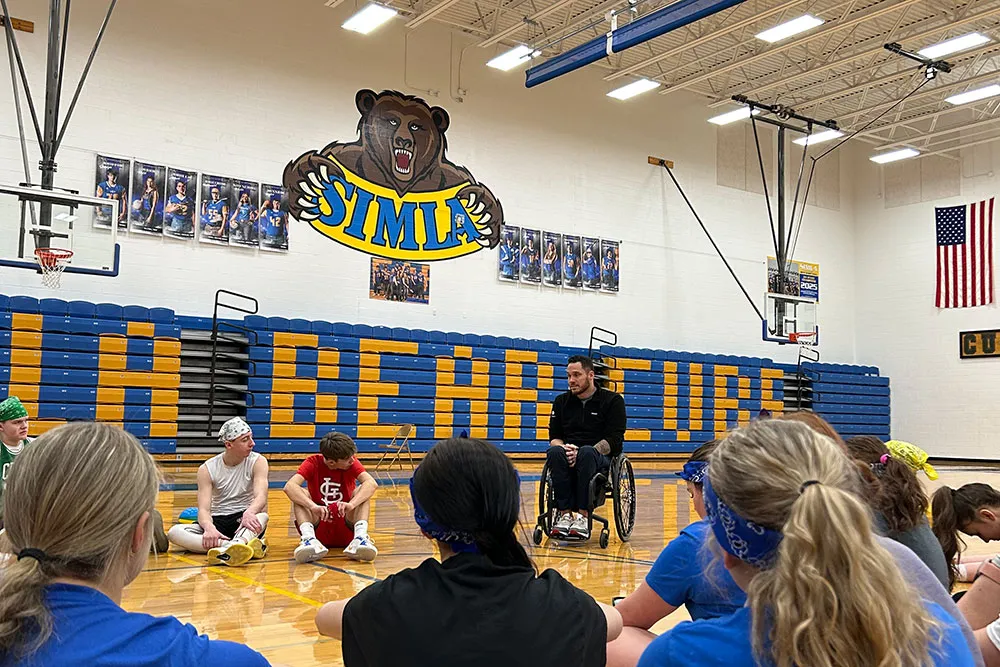
It has been a banner year for Simla. In a small Colorado community where the school calendar is built around deep postseason runs, the girls’ volleyball, boys’ basketball, and girls’ basketball teams all brought home state titles, and other programs have continued a long tradition of competitive success. For many students and families, it is simply expected that the Simla Cubs will be competing on the biggest stages.
In most schools, that kind of success could easily reinforce a “win-at-all-costs” mindset. At Simla’s Big Sandy School, something different is happening. Alongside the championship banners, a student-led TrueSport Club is helping define what winning the right way looks like—on the court, in the classroom, and in the hallways. The energy in the gym, the way teams carry themselves, and how athletes respond to wins and losses all send powerful messages about what this community values. TrueSport helps make those messages intentional. Simla’s experience shows that TrueSport and competitive success can coexist.
To explore how that works in practice, TrueSport sat down with members of Simla’s TrueSport Club to hear how their program has shaped the climate of their K–12 school. Below, these students share how a TrueSport club can do much more than support character education within a school. It helps students build real-world skills like conflict resolution, communication, and leadership, while creating a shared, student-driven culture where mentorship strengthens connections across grade levels and positive behaviors thrive in both athletics and the classroom.
Creating a shared culture across a school
One of the clearest benefits of a TrueSport club is that it gives students and adults a common language for the kind of culture they want to build. Rather than leaving values like integrity, teamwork, courage, respect, and responsibility to chance, schools can reinforce them through consistent experiences and student leadership.
That is what happened at Big Sandy School in Simla. Teacher and coach Sue Snyder attended a TrueSport event in 2013, brought the curriculum back to Simla, and said, “We need to do this in our school.” High school student leaders—many of them in Sue’s classes—began sharing the education with classroom teachers and identified junior high and elementary PE as natural places to start.
As the work expanded, Big Sandy became TrueSport’s first officially recognized TrueSport School.
Jeni Montague, Simla TrueSport Club sponsor, Library & Media Specialist, Head Track Coach, and Gifted and Talented Coordinator, described how the club took root in a building where elementary, junior high, and high school students all share one space. “It started as a set of student leaders who wanted to get the education into the hands of classroom and PE teachers,” Montague explained. “Over time, that effort morphed into this great way for kids to be involved with one another and helped strengthen a broader sense of community across the school.”
While sport gave the club its starting point, the sense of belonging it created was bigger than athletics alone, making space for students who wanted to lead and connect even if they were not currently playing on a team. Instead of school culture being defined only by competition, it began to be shaped by relationships.
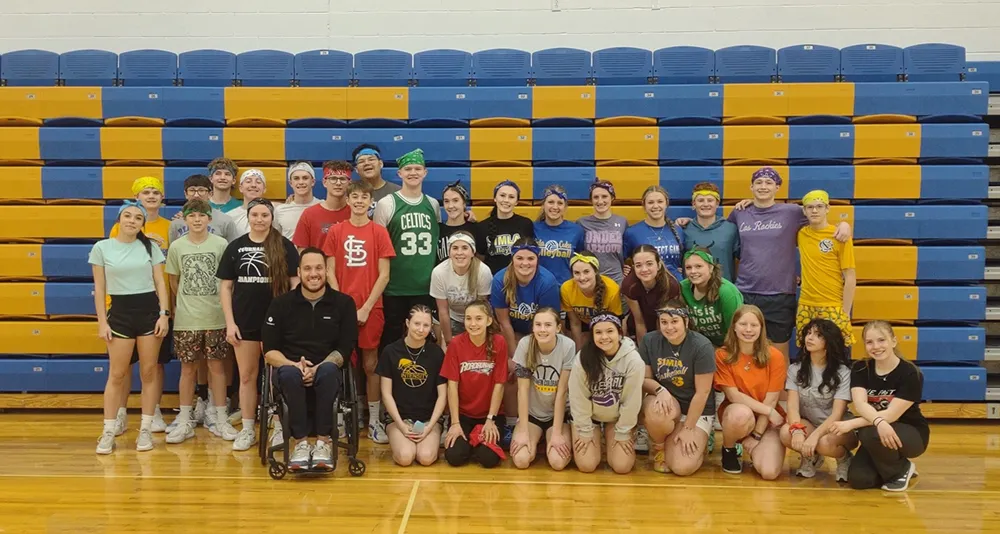
Turning students into mentors
A TrueSport club also creates meaningful peer-to-peer mentoring opportunities. Older teammates can mentor younger ones, or high school students can work with elementary or middle school students in the same community.
That structure helped move student leadership beyond titles and into action. At Simla, students are not just learning about TrueSport values for themselves; they are helping teach them to others. “Since the beginning, leadership of the club has included students from a range of activities like Future Business Leaders of America (FBLA), National Honor Society (NHS), Fellowship of Christian Athletes (FCA), and more who know how to communicate and reach kids from the smallest to the oldest of their peers. Some of those leaders were athletes, but any student who models the values of respect, responsibility, and teamwork can help carry the culture forward,” said Montague.
On a bigger scale, the club drives signature events like the TrueSport Games (a series of indoor physical activities) and a track and field day in May, where high school students run stations and activities for younger grades. Over the years, these events have evolved from a few simple games into full‑school celebrations, including recognition for “TrueSport stars” and opportunities for students to apply values like sportsmanship, inclusion, and healthy performance in real time.
Connor, a soon-to-be junior, has seen both sides of that experience. He remembers being in kindergarten and looking up to the high school students who led track and field day and TrueSport Games. “I always looked up to the high schoolers that were the leaders…and I wanted to be like them,” he shared. Now, as a senior and TrueSport club leader himself, he is one of the older students that younger kids recognize in the hallway and on the field—and he tries to lead in the same positive ways he saw modeled for him.
Research on cross‑age peer mentoring in schools suggests that when students themselves help lead lessons and learning activities for younger peers, the impact of developmental programs can grow significantly, boosting mentors’ self‑esteem and academic connectedness along the way. When student‑athletes act as mentors, everyone wins (as long as there is a clear structure and adult support).
The students at Simla describe that impact in simple but powerful terms. Connor says the club is “encouraging kids to be good leaders, to be kind around everybody, and growing people that are going to be strong in what they do.” Sophomore Aaliyah calls TrueSport “a way of connection that builds confidence to step up and do better things and to become a better person while learning life skills early.” A soon-to-be senior, Reese points out that “Simla has a winning culture, but we wouldn’t have that without leadership and teamwork.” Reese credits TrueSport with helping build those habits from elementary through high school.
Those comments reflect what TrueSport aims to do more broadly: use sport as a platform for developing resilience, leadership, decision-making, and ethical behavior. By focusing on mentorship and community engagement, TrueSport resources can help support not only the development of better athletes, but also future leaders and responsible citizens.
Reinforcing values beyond the gym
A TrueSport club can also help ensure that the lessons learned through sport are not confined to practices and games. TrueSport provides interactive lessons, coaching education modules, an expert‑driven article library, and athlete ambassador engagement, all designed to support everyday sport experiences. The breadth of material allows schools and organizations to adapt the program to their own context rather than forcing a one‑size‑fits‑all model.
In Simla, that integration shows up in both small and large ways. Montague points to the bulletin board in the elementary hallway featuring the TrueSport pillars and notes that “Coach Guy” consistently reinforces those values in his elementary PE classes. She also uses TrueSport teaching features and videos in a dedicated Google Classroom, asks freshmen and other grades to present lessons, and has student leaders design activities to implement with younger grades. For example, students designed a “ripple effect” demonstration that helped classmates see how one positive interaction can spread through a whole team or class.
These details matter because culture is usually built through repetition, not one‑time events. The more often students see and hear the same values reflected across classrooms, athletics, and peer relationships, the more those values start to shape how they think and act in every environment.
This is especially important in a youth sport landscape where many adults say they want sport to reinforce positive values and life skills, but far fewer believe it consistently delivers on that promise. TrueSport was created in response to that gap and is designed to offer practical tools that help schools and organizations align everyday sport experiences with the outcomes they say they want.
What it takes to start a club
The Simla story shows that building a club does not require perfection from the start. Montague shared that one early challenge was a familiar question in schools: “Do we really need one more club?” The answer, in their case, was yes—not because students needed another activity on the calendar or line on the resume, but because they needed a structure that would help them work together and strengthen the culture of the school.
There were also real‑world constraints. Simla’s club meets more often in the first semester, but from March to May Montague jokes that every Friday the answer to “Are you going to be here?” is “No, I am not,” thanks to the demands of spring sports and activities. Even so, the club continues because there is strong buy‑in from teachers, parents, families, community members, and students.
The students affirm that starting a TrueSport club is worth it, and they encourage both students and advisors to make the time. Connor’s advice to other schools is simple: “Just make the attempt to start it because it gives such a benefit to your school, especially when it comes to building relationships between older and younger students and giving leadership skills to everybody.” Aaliyah adds that schools should “push the word out and really educate students on how important TrueSport is for sports and life skills.” And Reese emphasizes that “TrueSport culture is not only for athletes. It’s good for life. It’s good for students in the classroom.”
Most importantly, schools do not need to create a huge program overnight. Instead, they can begin with a small group of student leaders, give them support and training, create clear expectations, and develop a schedule that is realistic and sustainable. Even setting aside the last 15 minutes of practice or an activity period for mentors to connect with younger students can be enough to start.
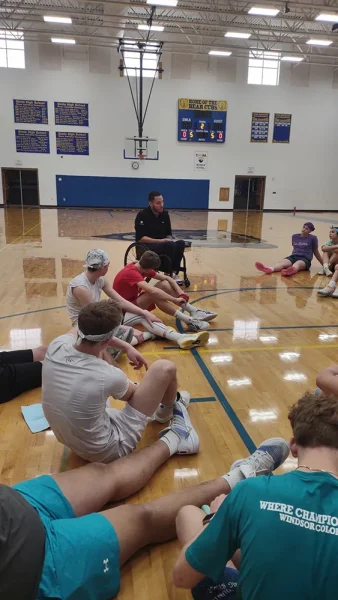
6 Steps to Creating a TrueSport Club at Your School
Every school is different, but these six steps can help you get started.
- Start with a clear purpose. Name why you want a club, whether it’s to improve sportsmanship, build leadership, connect older and younger students, support a winning-the-right-way culture, or all of the above. A clear “why” will help secure support from administrators, coaches, and families.
- Recruit an internal champion. Identify a coach, teacher, or counselor who can serve as the club advisor and can keep the club connected to the school’s broader goals. In Simla, having a sustained internal champion like Montague, who deeply believes that “your school culture is worth it,” helped the club grow from an idea into a part of the school’s identity.
- Recruit student leaders who model TrueSport values. Begin with a small group of students who already demonstrate leadership, respect for peers and teachers, follow through on commitments, and set a positive tone both in classroom and on the field. These do not all need to be varsity athletes; students from PE classes, student council, performing arts, FBLA, NHS, or other activities can also help build the kind of culture TrueSport promotes. Young people can be powerful mentors when adults help set expectations and provide support.
- Use TrueSport resources to shape meetings and outreach. Build club activities around existing lessons, articles, and discussion topics from TrueSport rather than inventing everything from scratch. This keeps the club grounded in evidence-based content and makes it easier to expand into classrooms, PE, or team settings. Simla uses TrueSport’s library of articles, topical videos, and ambassador content to keep things fresh and relevant.
- Create regular opportunities for peer mentoring. Pair older students with younger ones, lead short activities in PE classes, or host mixed-age TrueSport events. Keep the schedule manageable and consistent. Mentoring works best when it becomes part of the rhythm of the school, not just a one-time project. Simla’s TrueSport Games and track and field day, along with simple hallway check‑ins and high‑fives, show how these small, regular interactions can add up.
- Make the club visible and celebrate the impact. Promote the club at assemblies, on bulletin boards, and in athletics spaces. Highlight student-led initiatives and stories of positive leadership in newsletters or on social media. This visible recognition helps sustain momentum and shows the wider community what you value.
When schools give students real ownership and a structure to practice TrueSport values together, those values stop being slogans and start becoming culture. A TrueSport club is one powerful way to make that shift.