
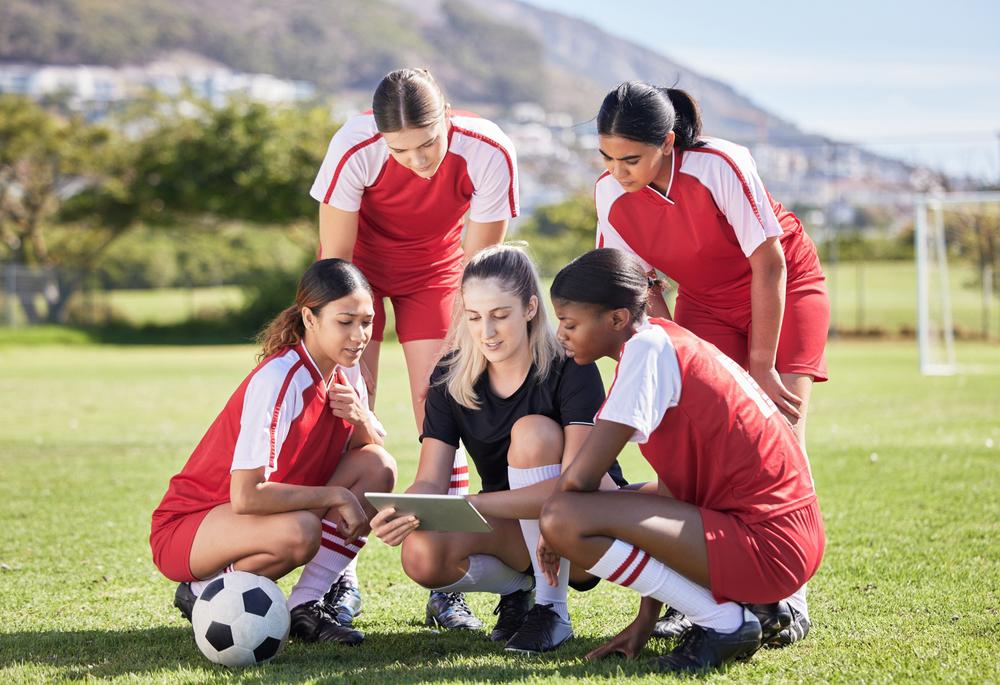
 Giving feedback—and receiving feedback—can be difficult. But at the same time, glossing over areas of improvement can hold athletes back from achieving their full potential. A strong team ensures that every member is receiving necessary feedback—but also feels appreciated and valued. It’s easy to point out what an athlete did wrong in a critical moment during a game. Is there something you could do instead?
TrueSport Expert and President of Now What Facilitation, Nadia Kyba, MSW, shares her approach to giving appreciative feedback that will help your athlete actually make improvements for the next game.
1. Feedback should be a conversation
“Feedback shouldn’t be about criticism, or an excuse to tell others how they should change,” says Kyba. “Appreciative feedback is a tool that should be used to help see developmental potential. It’s a collaborative approach, where the person who’s giving the feedback is open to a conversation.” As a coach, especially if you know you have a tendency to get emotional during competition, it can be easy to tip into criticism when talking to athletes about how a competition went. But if you want to see athletes make real progress, feedback should be a conversation, not a one-sided dialogue where you list the mistakes an athlete made.
2. Focus on the future
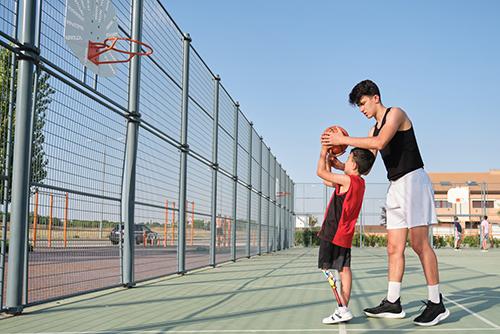 Why do we offer feedback? It should be because we want to help an athlete improve their performance. So, rather than start a conversation with an athlete about what they did wrong in a recent game or at practice, focus on the player’s future performance and solutions for improvement.
Appreciative feedback is an insight that’s offered with a positive and future focus,” says Kyba. “The emphasis is on how to be more effective and productive in the future, rather than placing blame for the past. Try talking about strengths or what you appreciated, then focus on opportunities for improvement.”
If, for instance, a cross-country racer fades at the end of a race, focusing on that fade may make the athlete feel upset or defensive. Instead, think about what the athlete should do next time before you begin the conversation: Should they focus on a sprint out of the final corner? Set a goal of holding a certain pace? Framing the conversation around what went well—the first chunk of the race—followed by what to focus on next time is more effective than simply critiquing their finish, especially when they are already aware of their mistake.
3. Use the four-step approach
There are four parts to providing appreciative feedback, says Kyba. Here, we’re listing out the steps and providing an example based on a specific in-game issue, but this can also be applied to behavioral issues like a player always being late for practice.
1: Signal that you’re giving feedback and make sure the athlete is receptive. Often, we forget this simple step, but it helps bring an athlete into the conversation. Example: “Can we spend a minute talking about some of the things I noticed in the game?”
2: Cut out anything that’s not objective. Be descriptive about the issue, and in some cases, providing video footage to make your point may even be helpful. Example: Instead of saying, “You were shooting really poorly,” give specific, objective data that can be applied to finding a solution, like, “I noticed that you were a little off balance when you were shooting.”
3: Discuss the impact. Example: “When you were off balance, it allowed the defensive players to block you and your shots were going to the left instead of straight.”
4: End with a question. Example: “What’s your take on the situation?” or “Is there something we can practice to help that balance for next time?”
4. Listen to your athlete at all points in the conversation
 Sometimes an athlete is simply not in a place where they can handle feedback. Perhaps they just took a hard test or had to give a major presentation and are still upset from that situation. Maybe it’s right after the game and emotions are running high. This is why step one—signaling you’re about to give feedback—is so important. Honor the athlete’s option to not be open to that feedback in the moment. “Asking an athlete if they’re open to feedback gives them that chance to be ready and not as defensive,” says Kyba. “It also gives them an out. If they’re not in a headspace to be able to have that conversation, respect that. You’ll be able to have a better, more productive discussion when they are ready.”
5. Let your athlete talk back
The reason we end these conversations with a question is so that the athlete has the chance to reflect and even to explain the behavior. Sometimes, there is a good explanation that you didn’t know about. In the case of an athlete always being late, it could be that he’s in charge of his little sister and has to call and check in with the babysitter before he can get ready for practice. It also allows your athlete to take ownership of the feedback, says Kyba. Asking a question offers the athlete a chance to come up with their own improvement plan, rather than waiting for you to tell them what to do next.
6. Start and finish with the positive
 Commonly referred to as sandwiching, one of the best ways to offer feedback is to include positives around the area that can be improved. Any feedback can be hard to handle, especially for young people who are struggling to find themselves and develop self-confidence. That’s why it’s as important to appreciate and praise as it is to give honest feedback for improvement. Kyba also encourages coaches to make the praise real and genuine: Don’t tell an athlete what you think they want to hear, find something real and positive to share. This also helps you better appreciate the athlete—it’s easy to focus on the negative in your own head as well!
7. Make feedback regular and consistent
If you want your athletes to listen to your feedback, it needs to be part of your team culture. “Have feedback for the team and for individuals constantly,” says Kyba. “At the end of a practice, ask how it went, ask the players for their feedback, and provide feedback back to them.” The goal is to have a team where players are actively seeking feedback, not shying away from it. But for that to happen, they need to see feedback as a positive thing, as a tool that will help them improve in the future. Kyba also notes that it’s important to give all players feedback, not just the fastest or slowest players on the team. It’s tempting to focus your feedback on the top players, or conversely, on the players who need the most work. But that approach misses the players who are doing ‘fine’ but might make huge leaps if they’re given some constructive feedback.
8. Athletes want feedback
 You may assume that no young athlete wants to hear feedback. And you’re not entirely wrong: Most people don’t love hearing feedback. But they do appreciate it when it’s done correctly. An athlete who wants to play collegiate sports, win a championship, or just see how good they can be will need that feedback in order to make improvements. “A star athlete wants to get better,” says Kyba. “And what they want and need to hear is specific feedback: What’s working, what can be improved, what we should focus on next.” It’s uncomfortable at first, but the more consistent you are with providing feedback, the more the athletes will come to expect and appreciate it for what it is, rather than hearing it as something critical and negative.
___________________
Takeaway
Make feedback a regular, consistent part of conversations with the team and individual athletes. Focus on keeping feedback objective, highlight positives as well as opportunities, ask the athletes for their opinions, and stay solution-oriented to help athletes improve in the future.