 As a coach, you may have heard the term ‘neuromuscular training’ and dismissed it as being too complicated, too academic, or simply too time-consuming to add to your already-packed practice and gameday schedule. But at its core, neuromuscular training simply means getting back to basics with your athletes and working to improve their fundamental movement patterns in order to see more success as things get complicated on the field.
Here, Dr. Michele LaBotz, TrueSport Expert and sports medicine physician, explains exactly what neuromuscular training really means for sport, and how you can apply it to your coaching practice.
What is neuromuscular training?
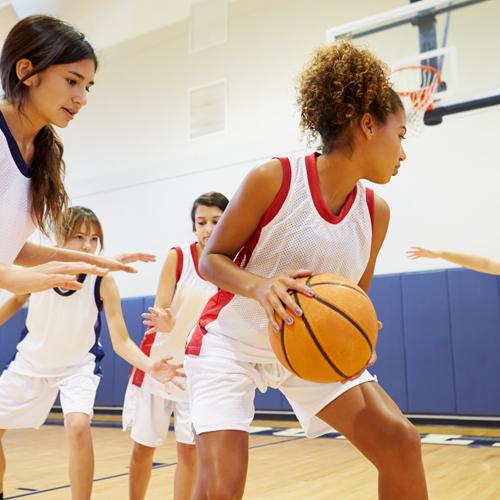 “A lot of times when we think about conditioning, we think about traditional strength and endurance, but integrated neuromuscular training is really about teaching quality of movement rather than amount of movement or strength of movement,” LaBotz explains. “A really common example is when you’re watching a girls’ basketball game and you see young girls jump. When they land, their knees tend to collapse inward, and that’s not a healthy pattern of movement, nor is it an efficient one.” Neuromuscular training focuses on correcting that jumping pattern, not just for performance, but to help prevent acute and chronic injuries as well.
“Neuromuscular training is really teaching nerves how to make the muscles work in a way that is consistent with best performance and lower injury risk,” she adds. You may have heard this referred to as fundamental or foundational movement patterns, or physical literacy — it emphasizes patterns of movement, not just repetition. The goal is to both improve the strength and connections of muscles, as well as increase your players’ awareness of their technique and how their bodies move.
Why should you add neuromuscular training to your coaching?
Not only will you see athletes improve on the field if they focus on the fundamentals of jumping, running, throwing, and balancing, but they’ll also be less prone to injuries like the dreaded ACL tear, and more likely to pursue healthy levels of physical activity throughout life. “This isn’t just about creating great athletes,” LaBotz says. “It’s about creating healthy humans who can succeed in a variety of activities and sports as they grow.”
Who should practice this?
 Athletes at all levels and all ages can benefit from integrated neuromuscular training to learn and relearn smarter movement patterns. “Ultimately, the earlier you can develop the good habits, the better,” says LaBotz. “There are different stages of development that lead to windows of ‘trainability’ for different types of athletic skill. It used to be that we just focused on the amount of movement that kids got each day, but now we’re also talking about the quality of that movement. The goal is to work toward optimal motor development, giving athletes the skills and physical literacy to understand how their bodies move and to be able to execute those movements in a variety of settings.”
How does it work?
The American Academy of Pediatrics (AAP) recently released guidelines for how to add neuromuscular training to practice, and the good news for coaches is that it doesn’t need to take up much of your time — you may even be doing some of it already. Drills that emphasize agility, balance, and speed are great ways to add in that training without needing an outside resource. “You have to span the gap between play and direct, supervised training that incorporates movement correction,” LaBotz notes.
- Try to find ways to challenge normal movements. If you typically do air squats with your team, LaBotz suggests trying to add a balance element by having them do squats standing on a Bosu ball or other type of balance trainer. “You’re really looking for that nexus between a more traditional kind of strength training combined with agility and coordination training. That is the crux of integrative neuromuscular training.”
- If you’re noticing sloppy movement patterns emerging in your team, it might be appropriate to bring in an outside expert, such as a physical therapist or a certified athletic trainer or strength and conditioning specialist, to really hone certain movements. “Teaching does need to be done with correct technique,” she notes.
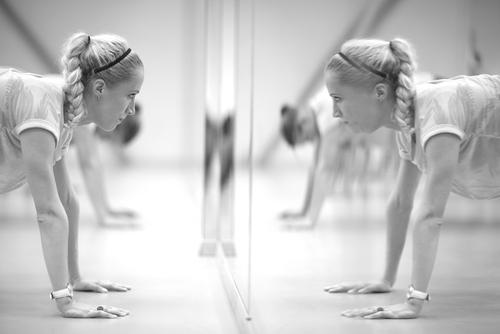 In the example of the young girls dealing with knees collapsing in at every jump, LaBotz would start by assessing overall strength, then add movement. “First, you have to make sure that they have adequate strength: The thing that keeps knees from going in on the landing is strong hip muscles. So, if hip muscles are weak, then they don’t have the capacity to land correctly. But even with adequate strength, a lot of girls still land with knees in because that’s been their movement pattern in the past. That’s where the neuromuscular training comes in. You can have them jump in front of a mirror, film the movement, or demonstrate to them what they’re doing. And then, you give can them cues like ‘When you land, keep your knees over your second toes.’” Addressing this movement pattern has been shown to reduce ACL injuries, and the AAP has resources to help coaches develop appropriate drills for their athletes.
- Using a mirror or video are often effective ways to highlight problems. “Nothing beats visual feedback in terms of athletes being able to see themselves and adjust,” LaBotz says. “That’s true not only for jumping, but even for running. We do a lot of video gait analysis in our physical therapy department because if you don’t see it, it’s hard to visualize what’s happening and how to change it.”
_____________________________
Takeaway
Remember that this process will take time and patience on your and your athlete’s part. “Those motor pathways are like super-highways for the nerves and the muscles to communicate and your body already has default patterns in place. So, there needs to be more mindfulness about the movement,” LaBotz concludes. “Athletes and coaches have to pay closer attention. And athletes must be willing to tackle not only the physical effort but the mental effort to break an old habit. That is the hardest part and the greatest challenge.”