 As a coach, you likely know that athletes learn the most through making mistakes and using those mistakes to make improvements. But how can you translate mistakes into growth, and avoid the common trap of excuse-making that athletes tend to fall into?
Peter C. Scales, PhD is a developmental psychologist, researcher, author, lifelong athlete, and a U.S. Professional Tennis Association-certified tennis teaching pro with a passion for coaching. Here, he’s explaining how to nurture a team of young athletes who are both unafraid of mistakes and able to accept responsibility and learn from those moments.
1. Understand why responsibility matters
Before Scales can explain why mistakes are important, it’s critical to understand that as a coach, your focus cannot be on winning. Yes, winning is great and important, says Scales, but if an athlete believes that their value is entirely based on their ability to win, that will create a culture where making excuses becomes the norm. “You are not a better person when you win, and you’re not a worse person when you lose,” Scales says. “Rather, how you handle winning or losing is the reflection of the kind of person you are. The goal is improving as a player and as a person, and you can’t improve unless you’re making mistakes.”
Once an athlete makes a mistake, the next step in the process is learning from it, which is impossible if an athlete makes excuses. “When you make excuses, you’re not taking responsibility for what happens. But the reason that you lost today is not because of the sun. It wasn’t because it was too windy. It wasn’t because your shoes were too tight,” Scales says. “The reason you lost today was that your opponent was better than you today. Today. Accept that, and now you can move on and improve. But if you don’t accept that, then a coach cannot help you.”
2. Remember that young athletes don’t exist in a vacuum
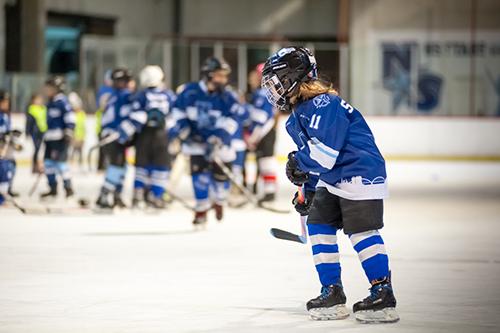 It’s important for coaches to empathize with athletes who are quick to make excuses after making a mistake: Every athlete has an emotional background that contributes to how they deal with mistakes. “It’s easy for an athlete to go from making a mistake to feeling like they are a worthless human being,” says Scales. “We make excuses because we’re trying to protect our egos. We’re trying to protect our senses of autonomy, belonging, and competence.” And excuses may be an even deeper defense mechanism for young athletes. For example, if an athlete is used to a parent berating them for every tiny mistake, they may automatically try to cover up mistakes or deny responsibility. Or maybe in the past, the athlete had a coach who didn’t accept mistakes.
It can be tempting to start berating players for making excuses, but it’s important to lead with compassion and remember that young athletes may not even be aware of these behaviors — they’re likely just using excuses as coping mechanisms.
3. Focus on solutions
There’s a subtle difference between an excuse and a lesson to be learned, though. Don’t default to silencing a player who’s listing those excuses (sun, wind, shoelaces) that caused them to lose. Rather, use this as a chance for them to learn. Look at what went wrong, analyze the situation, but then, help the athlete come up with solutions, says Scales. For instance, if the sun was in their eyes, could they try using a visor or polarized sunglasses next time? “Competition is a series of problems to solve, and if you solve all the problems, you’ll probably win,” Scales says. “I try to get athletes to create a little more space between what’s happening and how they evaluate it, while also making it as impersonal as possible. It’s not a judgement about your worth as a human being because you missed a shot. If you can learn from that missed shot, you can problem-solve for next time.”
4. Create an ‘excuse-free’ ritual
 Excuses don’t just happen after practice: Many athletes come into a competition or training session with a set of excuses already built up around why the day isn’t going to go well. Scales is a fan of helping athletes understand their inner dialogue by bringing it to life in the form of an Excuse Box, where athletes actually spend a minute writing down any excuses that are coming to mind before practice or the big game. This might look like ‘I didn’t get a lot of sleep last night,’ or ‘I got in a fight with my friend and I’m feeling distracted.’ Writing out these “pre-excuses” helps athletes let those feelings go and allows them to focus on the task at hand. “Write it down, crumple it up, put it in the box, and when you come on to the court, it’s an excuse-free zone,” says Scales. “We want to try things, we want to learn, we want to make mistakes—but we take responsibility for what happens.”
5. Try a “hate this” list
Scales has athletes create a list of situations and circumstances that they ‘hate’ before big competitions. For a cross-country runner, for example, this might look like an upset stomach on race day, shoelaces that are tied wrong, wearing too many layers, rude opponents, not knowing about a hill on the course, and so on. Then, he asks athletes to go through that list and first, switch the rhetoric. Swap “I hate” to “I love.” It might not feel natural (no one loves an upset stomach on race day!), but that simple practice can have a positive psychological effect. Then, athletes can look at that list and see what is controllable on it. Some things, like a rude opponent, can’t be controlled, but things like eating a breakfast that the athlete knows will sit well in their stomach on race day can control the upset stomach.
6. Control the controllable
 “I want athletes to understand that they have a choice about how they react to everything. Ultimately, as humans, we do not control very much,” Scales says. Early in the season, he recommends spending time with the team creating a big Venn Diagram. In one circle, list things that matter in your sport. In the other, list things that are controllable in your sport. Then, see where there is overlap. “There will be a tiny little overlap of things that matter that are controllable,” he says. “And that’s where you should focus.” The goal isn’t to perfect those things, Scales adds, but instead of making excuses about things that can’t be controlled, athletes should be focusing on things they can control, and aim for small, continuous improvements.
7. Stop calling them mistakes
Sometimes, even the phrase ‘mistake’ can cause an athlete to have a negative reaction. “I rarely would call something a mistake in practice,” says Scales. “Instead, I do a lot of questioning. I try not to tell an athlete what they did wrong. I’ll ask questions like: What were you trying to accomplish with that? How often do you think you accomplished it? Did you accomplish what you wanted? What else could you have done to get the result you want?”
______________________
Takeaway
Mistakes are critical to learning and future success. These tips will help coaches create a sport environment that allows young athletes to embrace and grow from mistakes and have more fun, while also taking responsibility for their actions and finding solutions.