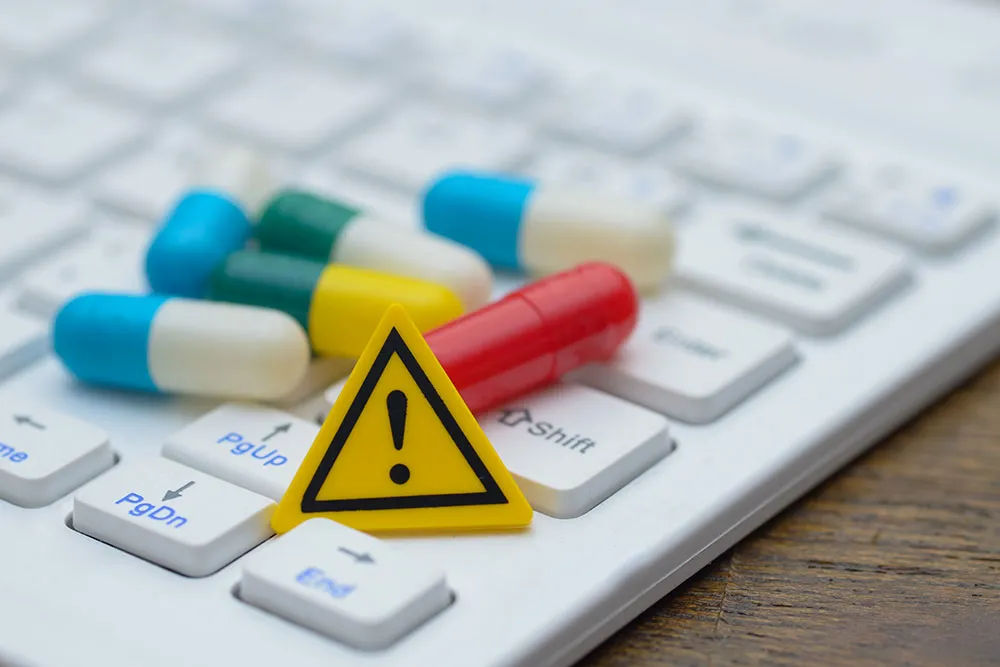
There are thousands of illegal online pharmacies in operation today, and roughly 95% of websites offering prescription-only drugs online operate illegally. These sites often look polished and trustworthy, and many are promoted directly to teens and young adults through influencers on platforms like TikTok. Young athletes are seeing content that promises quick muscle gain, rapid weight loss, pain relief, or better focus, and a single click can send them to an illegal pharmacy without them realizing it.
TrueSport Expert and sports medicine doctor Michele LaBotz calls drug counterfeiting and illicit online pharmacies “the largest form of organized crime” and notes that “the number of online pharmacies is only growing.” She explains that many operators maintain multiple sites aimed at different audiences: “One might be focused on older men who are struggling with low testosterone, while another is targeting teens who want to build muscle. It is all the same pharmacy and products, but the marketing is different.”
To explore these risks and how sport can help protect against them, we also draw on the experience of Daniel Burke, Intelligence and Investigations Director for the U.S. Anti-Doping Agency (USADA) and former FDA criminal investigator, and Jennifer Royer, Ph.D., USADA’s Senior Director for TrueSport and Awareness.
What Teens Are Facing Now
Fentanyl is one of the most lethal drugs on the market, but it is not the only threat. Other substances, such as carfentanil, can be even more powerful and may not show up on typical fentanyl tests, which makes the drug landscape even more dangerous.
The Monitoring the Future survey from the National Institute on Drug Abuse shows that about 1 in 3 high school seniors, 1 in 5 sophomores, and 1 in 10 eighth graders report using an illicit substance. While overall teen drug use has decreased since the pandemic peak, overdose deaths in youth are rising, which suggests that the drugs teens do access are more potent or more frequently contaminated.
It is tempting to believe that sport fully protects athletes from these risks. Sport is good for mental health, and many athletes care deeply about staying eligible and avoiding banned substances. But a stressed or injured athlete may still be tempted by a pill that promises to ease anxiety, help with studying, or get them back on the field faster, especially when those products are just a click away.
How Illegal Online Pharmacies Target Young Athletes
There are tens of thousands of illegal online pharmacies and many more operating in gray areas that sell substances banned in sport even if they are not always illegal in general. These businesses often run multiple websites aimed at different audiences, from older men seeking testosterone to teens chasing muscle growth or weight loss, all selling the same underlying products.
Social media is often the bridge between athletes and these sites. “There is this incredible amplification of messaging where a lot of the purchases actually happen through influencers and not through the pharmacies themselves,” says LaBotz. “Kids click the buy now button on an influencer’s post, and the influencer gets a payout, and the online pharmacy makes money.” Messaging aimed at teens often focuses on:
- Building muscle with steroids or peptides
- Rapid weight loss with diuretics or DNP (2,4-dinitrophenol)
- Better focus with stimulants like non-prescribed Adderall
- Pain relief with opioids like oxycodone products
- Stress and anxiety relief with sedatives like Xanax or Valium
The messages are tailored: LaBotz notes that much of the social media content for young men focuses on muscle growth, while young women are more often targeted with weight loss messaging. She adds that even when a product is promoted as a simple supplement, “the potential for purchasing contaminated drugs is present regardless of whether a supplement promises to boost testosterone or cause rapid weight loss.”
Some products are labeled “for research only” or “laboratory chemicals,” but the packaging and influencer content make clear that they are meant to be swallowed, not studied. Burke explains that these companies “skirt the law by calling the drugs ‘research chemicals,’” but emphasizes that “these ‘research chemicals’ can kill. They are dangerous, and the company never intended for the drugs to be just for research.”
Fentanyl: Often Hidden in Other Pills
For most young athletes, the danger is not actively seeking fentanyl. The bigger risk is accidentally taking it in a counterfeit pill or contaminated product. Fentanyl is cheap to make and extremely potent, so dealers and illegal pharmacies use it to mimic the effects of other drugs in small, hard-to-detect amounts. Burke notes that a small amount of fentanyl can have similar effects to a much higher dose of other commonly used opioids, which makes it lucrative for dealers to use.
Fake pills made to look like real medications such as oxycodone products, Percocet, Xanax, or Adderall can contain lethal doses of fentanyl. The DEA’s “one pill can kill” messaging is meant to highlight that a single counterfeit pill from a friend, dealer, or online source can be enough to cause a fatal overdose. Burke also points out that other substances like DNP used for weight loss can be deadly in small doses and are increasingly turning up in illegal weight loss products.
Even supplements that seem harmless, like pre-workout powders or protein shakes, can be risky if purchased from unverified sellers or illegal pharmacies. A TrueSport intern and collegiate athlete described how a friend, who was not a competitive athlete but “just lifts,” tried a pre-workout supplement he had bought online, mixed it with alcohol, and ended up in the hospital after his heart stopped. “It showed me that it can happen to anyone,” he said.
The Algorithm Effect and Mental Health
More than half of American teens are on TikTok daily, and many also spend significant time on other platforms where drug-related content circulates. The Center for Countering Digital Hate has shown that hashtags related to steroids have accumulated hundreds of millions of views, with heavy engagement from users under 24, and that influencers are linking to sites selling illegal drugs.
Caregivers often underestimate how quickly a teen’s algorithm can shift into darker territory. LaBotz describes experimenting with TikTok to see this firsthand. As an adult clinician, she initially saw mostly health-related content from other professionals. But when she created a fake account modeled on a teen interested in bodybuilding, “it did not take long before I started getting fed content that promoted steroid use. It seemed highly unregulated.”
Royer notes that the impact is not only physical. She explains that these algorithms are “fueling body dysmorphia at rates we have never seen before,” creating serious mental health challenges for teens. She adds that, at their core, many of these messages are telling young athletes that “they are not enough as they are,” which can push them toward extreme or unsafe measures to change their bodies or performance.
Influencers themselves may not fully grasp the risks of the substances they promote. “Influencers may not be super aware of the rates of contamination or impurity in the products that they are promoting,” says LaBotz. “They are just aware that they are making money.”
How Sport Can Help, And Where Risks Remain
Sport offers several protective benefits against drug use, but it also creates specific vulnerabilities that caregivers should recognize.
Sport supports mental and emotional health
Sport can improve mood, resilience, and emotional regulation, which lowers the chance a teen will use drugs to escape stress, anxiety, or depression. A young athlete with strong emotional regulation is less likely to turn to substances for coping.
However, perfectionism, fear of failure, or constant pressure to perform can turn sport itself into a source of stress. Watch for low motivation, harsh self-talk, or unrealistic expectations as signs an athlete may be struggling and may benefit from support, including from a mental health professional.
Team culture can discourage or normalize drug use
In a healthy team culture, athletes know that using illegal drugs or banned substances hurts not only themselves but also their teammates. That sense of accountability can make experimentation with drugs less likely.
In some environments, however, team culture can normalize or even encourage risky behaviors. LaBotz notes that sports like football, lacrosse, ice hockey, and wrestling often carry higher risk, partly because athletes are trying to gain weight and build muscle and partly because some of these cultures can be more “party oriented” when it comes to alcohol.
Awareness of drug-testing can be protective
Collegiate or Olympic/Paralympic athletes who expect to be drug-tested often know more about banned substances and the risk of contamination in unregulated products. This can make them more cautious about grabbing pills from friends or ordering supplements from unverified online sources.
At the same time, many assume that powders, pre-workout drinks, or “natural” boosters are always safe. Illegal pharmacies and even mainstream marketplaces can falsely claim that products are third-party tested. “A number of these online pharmacies will say that these products have third-party testing and look legitimate,” says LaBotz, even when that is not true.
Athletes value hard work but may still chase shortcuts
Most athletes understand that consistent effort is what truly leads to progress and a long-term career and that shortcuts like steroids or drastic weight-cutting are risky. Many know from experience with injury recovery that “there are no shortcuts to getting better.”
Yet an athlete who feels behind, who has not bulked up like teammates despite hard work, may be tempted to look for a quick win through steroids, growth agents, or extreme weight loss drugs. These athletes often need extra education and support around healthy performance and body image before they turn to unsafe substances.
Structure and goals help, but pressure adds risk
Sport keeps athletes busy and engaged, which reduces boredom and unstructured time that can lead to experimentation with drugs. However, injury, being cut from a team, or high-pressure times like major competitions and exam weeks can leave athletes feeling isolated, stressed, or desperate.
An athlete who is sidelined might start looking for other outlets or quick fixes, including painkillers or anxiety medications procured from friends or bought online. Most fentanyl exposure in young athletes is likely to come through counterfeit pills, not from someone intentionally seeking fentanyl.
What Caregivers Can Do
Caregivers play a crucial role in keeping young athletes safe in this environment. Consider these steps:
- Understand that your athlete’s social media feed is not the same as yours. Algorithms can quickly push them toward performance and body-content that promotes dangerous substances.
- Talk regularly and openly about pills, supplements, and online products. Emphasize that anything not prescribed by a licensed provider and filled at a legitimate pharmacy can be contaminated and that one counterfeit pill can be deadly.
- Whenever possible, avoid using online pharmacies. Have telehealth or in-person providers send prescriptions directly to a trusted, licensed pharmacy.
- If you must use an online pharmacy, look for clear accreditation and never buy from any source willing to provide prescription drugs without a valid prescription from a licensed prescriber.
- Be cautious with supplements. Use products that are sport-specific and third-party certified, buy only from official company websites, and verify certification independently.
- Pay extra attention during times of injury, high academic stress, or major competition, when your athlete might feel pressure to seek quick fixes for pain, anxiety, or performance.
Illegal online pharmacies and social media marketing have made dangerous and sometimes lethal substances only a few clicks away for young athletes. Sport can be a powerful protective factor, but no athlete is completely immune. Informed, ongoing caregiver involvement is essential to help athletes stay safe, healthy, and true to their values in and out of sport.
_______________________________________
Takeaway
Illegal and unregulated online pharmacies are easier to access than ever, and young athletes are being targeted through social media with pills and supplements that can be contaminated with fentanyl or other lethal substances. While sport is generally protective against drug use, it is not a guarantee, so caregivers need to understand both the risks and the red flags to watch for.