Video Transcript
Hi, I’m Aaron Schiedies, Paralympic triathlete and TrueSport Ambassador. And today I want to talk to you about mental wellness. Mental wellness can be a complicated subject, but I think what’s most important is thinking about how we define it first, in order to learn how to put it into practice. Just like the body, the mind needs caring and training in order to stay mentally well. Day to day activities like learning and decision making all play a role in our mental wellness. What’s cool about sport, though, is it offers an environment that challenges and nurtures mental wellness. When I was in middle school, I was a really good soccer player, and I really had this dream of becoming a professional soccer player. I kind of really thought that that was the direction that I was going, and it was my path. But that all changed as I started losing my vision.
When I was nine, I started losing my vision progressively from a genetic eye condition. And as I lost more and more vision, it became more and more difficult for me to see the ball, see my teammates. And at first I really just thought, “Well, I’ll just work harder than everyone else and I can still kind of keep up with everyone else.” But when you can’t see the ball and can’t see who’s your teammate or who’s the opponent, it’s just not realistic. So I really struggled in those years, my teenage years, because those are the years also that everyone’s really trying to be normal and seek normalcy. And so, I was struggling with that because, you know, the reality was that I wasn’t necessarily normal like everyone else. And I really needed to learn that what I was and the vision or lack thereof that I had was normal for me. And that just was who I was. So, my teenage years were really riddled with kind of a mental health struggle. I was diagnosed with OCD, an eating disorder and depression, going into high school. And that was really where, thankfully, I was able to really lean on my support network.
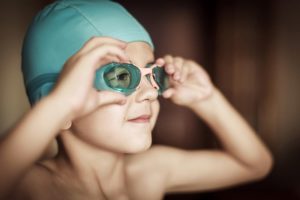
My brother saw that I was struggling, and he encouraged me to join the swim team and at that time I was really in a deep hole of not really having any sort of motivation for anything. But thankfully I did get enough energy to take him up on it and, you know, go into swimming and join the swim team. And swimming really changed my perspective. It changed my life because it gave me that outlet. Being in the water was kind of like that freedom from all the pressures of society and from there I really started looking for new challenges and developing more confidence. I really learned to be resilient. It just gave me confidence that I could still be involved in sport.
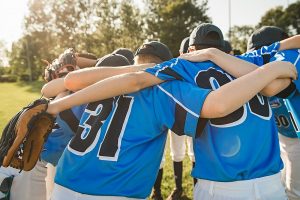
And it also made me realize that there’s another door and, you know, maybe soccer at one point was the direction I thought I was going, but there was another door that I could still kind of persevere and move towards and succeed in sports. I just had this energy and motivation to continue challenging myself. And so, I did my first triathlon when I was going into my senior year of high school, and it became my passion at Michigan State to develop a team of triathletes as part of my college experience. And they really became like my family and another part of my support network along my journey in triathlon. In 2002, I won my first world championship in triathlon as an athlete with a disability. And that really just jumpstarted my career and gave me more and more opportunities and it really gave me something that I never thought I would have when I was in those difficult times.
But you never really know where you’ll go if you keep your kind of mindset only in one area, you need to have that open mind of other doors that might come up. And so, for me, just having that opportunity to start swimming and going to endurance sports really changed my life. As my personal journey has taught me, working on mental wellness is not as linear as I thought it would be. There are bumps along the way and we need to seek out support during challenging times. Developing healthy coping mechanisms like learning to breathe and asking for help takes time. By simply changing your attitude, you can change how you see the world, and only then can you see your greatest potential.